

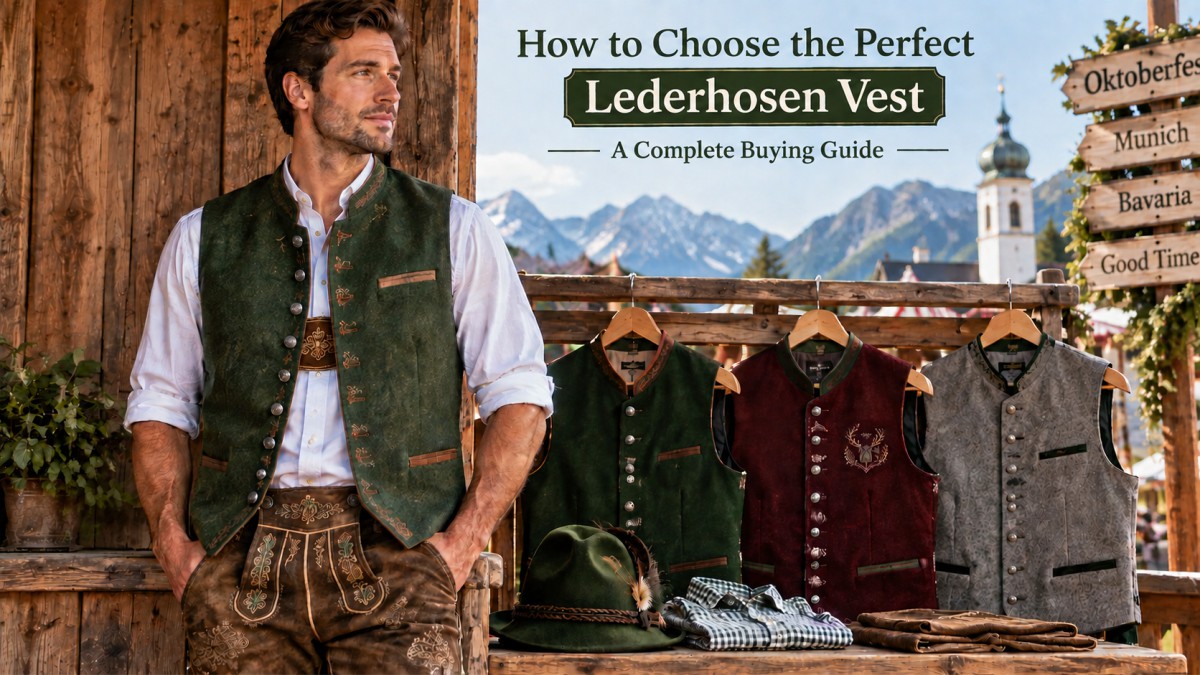
A Lederhosen vest is an important part of traditional Bavarian clothing and can bring the different elements of a Lederhosen outfit together. Worn as an additional layer over the shirt, it adds structure and character while complementing the Lederhosen and other traditional pieces. The right vest can help create a look that feels cohesive, traditional, and well put together.
Choosing a Lederhosen vest, however, involves more than simply picking a design you like. The material, fit, style, quality, color, comfort, and occasion can all affect how well it works with your outfit. This guide explains what to look for when choosing a Lederhosen vest, how to evaluate different options, and what to consider before making a purchase, whether you are dressing for Oktoberfest, a traditional Bavarian event, or another occasion.
Quick Answer: How Do You Choose the Perfect Lederhosen Vest?
Tip: Choose a vest that complements your Lederhosen and overall outfit rather than selecting one based on appearance alone.
What Is a Lederhosen Vest?
A Lederhosen vest is a traditional waistcoat-style garment worn with authentic lederhosen as part of Bavarian Trachten clothing. It is commonly referred to as a Trachten vest or Bavarian Trachten vest, reflecting its place within traditional Bavarian dress. It is designed specifically for traditional outfits and is usually worn over a shirt. Unlike a standard waistcoat associated with suits or formalwear, a Lederhosen vest incorporates design elements that reflect Bavarian and Alpine clothing.
Typically, the vest has a waist-length or structured cut, a front fastening, and features such as decorative buttons, embroidery, traditional patterns, or Bavarian motifs. It sits over the shirt and works as a distinct upper-body garment within the Lederhosen outfit. These features give the vest its recognizable traditional appearance and distinguish it from an ordinary waistcoat.
Why Does a Lederhosen Vest Matter?
A Lederhosen vest plays both a practical and cultural role in traditional Bavarian dress. As an additional layer, it can provide some warmth during outdoor celebrations and cooler weather. It also adds another visible element to the outfit, giving the upper body more structure and allowing traditional details to become part of the overall appearance.
The vest also has a place within the broader tradition of Bavarian Trachten clothing. This is why it continues to be worn for Oktoberfest, folk festivals, and other Bavarian celebrations. For these occasions, wearing a vest can help maintain the traditional character of the Lederhosen outfit while allowing the wearer to express a particular style through the garment’s design and details.
If you want to learn how to coordinate the complete outfit, see our guide on What to Wear with Lederhosen: A Complete Outfit Guide.
What Vest Do Men Wear with Lederhosen?
Men traditionally wear Bavarian Trachten vests with Lederhosen. These vests are designed to complement traditional Bavarian clothing and can be made from different materials, each giving the garment a distinct texture and character. Common choices include wool and Loden, velvet, linen, cotton and fabric blends, and leather or suede leather.
Wool and Loden Vests
Wool and Loden vests are closely associated with traditional Bavarian and Alpine clothing. Wool provides a warm, structured appearance, while Loden is a dense wool fabric known for its traditional character and substantial feel. These vests can also feature traditional details such as embroidery and decorative buttons.
Velvet Vests
Velvet vests have a soft, rich surface that can give a Lederhosen outfit a more refined and festive appearance. They may include traditional Bavarian details, allowing the material to work naturally within a Trachten outfit.
Linen Vests
Linen vests provide a lighter and more breathable option, making them suitable for warmer conditions. Their natural texture gives the outfit a relaxed appearance while still fitting within traditional Bavarian clothing.
Cotton and Fabric Blend Vests
Cotton and fabric blend vests offer a lightweight and versatile alternative. Depending on the fabric and construction, they can have a simpler or more contemporary appearance while still being worn as part of a Lederhosen outfit.
Leather and Suede Leather Vests
Leather and suede leather vests add a textured, rustic character to the outfit. Suede is a form of leather with a soft, napped surface, so it should not be treated as a completely separate material category. Leather vests can also feature traditional embroidery, decorative buttons, or other Bavarian details.
Trachten vest describes the traditional Bavarian clothing style rather than one specific material. A Trachten vest can therefore be made from wool, Loden, velvet, linen, or leather and may include features such as embroidery, decorative buttons, traditional cuts, or regional details. These characteristics can overlap, so the material and decoration do not define separate vest categories.
If you are deciding between a vest and another traditional layer, compare Lederhosen vests vs. traditional Bavarian jackets to understand the differences.
How to Choose the Right Lederhosen Vest
Now that you know the different vest materials, consider where and when you plan to wear the vest. These factors can help you narrow down the right option.
1. Material
Choose the material based on when you plan to wear the vest, the occasion, and the look or comfort you want. Each option has its own advantages, so the right choice depends on your needs.
| Material | Suitable For | Main Purpose |
| Wool and Loden | Cooler weather, Oktoberfest, and traditional Bavarian events | Adds warmth while maintaining a classic Trachten look |
| Velvet | Festive events, evenings, weddings, and formal occasions | Gives the outfit a richer and more refined appearance |
| Linen | Warm-weather Oktoberfest celebrations and outdoor events | Keeps the outfit lightweight and breathable |
| Cotton and Fabric Blends | Casual wear and warmer conditions | Provides a lightweight and versatile option |
| Leather and Suede Leather | Oktoberfest and traditional-themed occasions | Adds a rustic, textured character that pairs naturally with Lederhosen |
2. Size and Fit
When choosing the right Lederhosen vest, consider how closely you want it to fit your body:
| Fit | Extra Chest Room | Description |
| Slim Fit | About 1 inch (2.5 cm) | Close, tailored appearance |
| Regular Fit | About 1–2 inches (2.5–5 cm) | Comfortable everyday fit |
| Relaxed Fit | About 2–3 inches (5–7.5 cm) | Looser feel and easier movement |
Always compare your measurements with the seller’s size chart, as sizing can vary between vests. Most manufacturers provide body measurements in their size charts rather than the actual garment measurements. They usually mention the additional ease or room of the vest separately, showing how much extra space the garment has compared with the listed body measurement.
Tip: If the size chart does not specify the extra room or ease, contact the manufacturer and ask them to confirm the vest’s actual garment measurements.
3. Style and Cut
Consider the length, collar, buttons, and overall shape. Choose traditional details for a classic Bavarian appearance or simpler designs for a modern look.
4. Construction and Quality
Check the stitching, seams, buttons, lining, and finishing. Well-made details can indicate better durability and long-term use.
5. Color and Design
Choose colors that complement or contrast with your Lederhosen. Consider embroidery, patterns, and decorative details without making the outfit look overly busy.
6. Comfort
Consider weight, breathability, texture, and freedom of movement, especially if you will wear the vest for several hours.
7. Occasion
Choose according to the event: traditional designs for Oktoberfest and Bavarian events, refined styles for weddings and formal occasions, and simpler designs for casual wear.
8. Price and Value
Compare the price with the material, construction, craftsmanship, detailing, and durability. Choose based on what you are getting for the money rather than price alone.
What to Look for When Buying a Lederhosen Vest Online
When buying a Lederhosen vest online, the product page should give you enough information to understand exactly what you are ordering. Start by checking the size chart and measurements, then read the material and product description carefully rather than relying only on the product title. Clear, detailed product photos are also useful for checking the buttons, stitching, embroidery, texture, and overall finish. Customer reviews can provide additional insight into how the product looks and performs in real use.
It is also worth checking the seller information and confirming where the order will be shipped from. Review the available shipping options, delivery times, and costs before placing an order, especially if you need the vest for a specific event. Finally, read the return and exchange policy so you know what options are available if the vest does not meet your expectations or you need a different size.
How Much Does a Lederhosen Vest Cost?
A Lederhosen vest typically costs around $80 to $350, depending on the material, craftsmanship, construction, and decorative details. Premium or handcrafted designs can cost $400 or more.
| Price Range | What You Can Typically Expect |
| $80–$150 | Simpler designs, cotton or fabric blends, and basic wool options |
| $150–$350 | Better-quality wool and Loden, velvet, linen, or leather vests with more detailed construction |
| $350+ | Premium leather, high-quality velvet or Loden, handcrafted construction, and elaborate traditional detailing |
Material can have a noticeable effect on price. Wool and Loden vests can offer a traditional and structured appearance, while velvet may cost more when used for richer, more decorative designs. Linen and cotton blends can provide lighter options, while leather and suede leather may cost more because of the material and construction involved.
When comparing prices, also consider stitching, buttons, lining, embroidery, finishing, and durability. A higher-priced vest is not automatically better, so look at what you are actually getting for the money and choose according to how often and where you plan to wear it.
Conclusion
Choosing the perfect Lederhosen vest starts with understanding the available options and then matching them to your needs. Consider the material, fit, style, quality, color, comfort, occasion, and price before making your choice. Whether you need a vest for Oktoberfest, a traditional Bavarian event, a formal occasion, or casual wear, choosing based on where and how you plan to wear it will help you find an option that complements your Lederhosen and overall outfit.
FAQs
1. How do I choose the right Lederhosen vest?
Choose a Lederhosen vest based on material, fit, style, quality, color, comfort, occasion, and price. Consider where and when you will wear it, then choose an option that complements your Lederhosen and suits your preferred look.
2. What material should I choose for a Lederhosen vest?
Choose the material according to the season, occasion, and purpose. Wool and Loden suit cooler traditional events, linen works well for warmer weather, velvet suits festive or formal occasions, cotton and fabric blends offer a lightweight option, and leather or suede leather provide a rustic character.
3. How do I choose the correct size Lederhosen vest?
Measure your chest and body and compare the measurements with the seller’s size chart. Choose a vest that sits comfortably over your shirt without being too tight or excessively loose and allows natural movement.
4. How can I tell if a Lederhosen vest is good quality?
Check the stitching, seams, buttons, lining, edges, and finishing. The material should match the product description, while secure fastenings and clean construction can indicate a well-made vest.
5. How do I choose a Lederhosen vest for Oktoberfest?
Consider the weather, traditional character, comfort, and overall outfit. For cooler Oktoberfest conditions, wool or Loden can provide warmth, while linen can be suitable for warmer weather. Choose a design that complements your Lederhosen and works naturally with the rest of your traditional outfit.
