
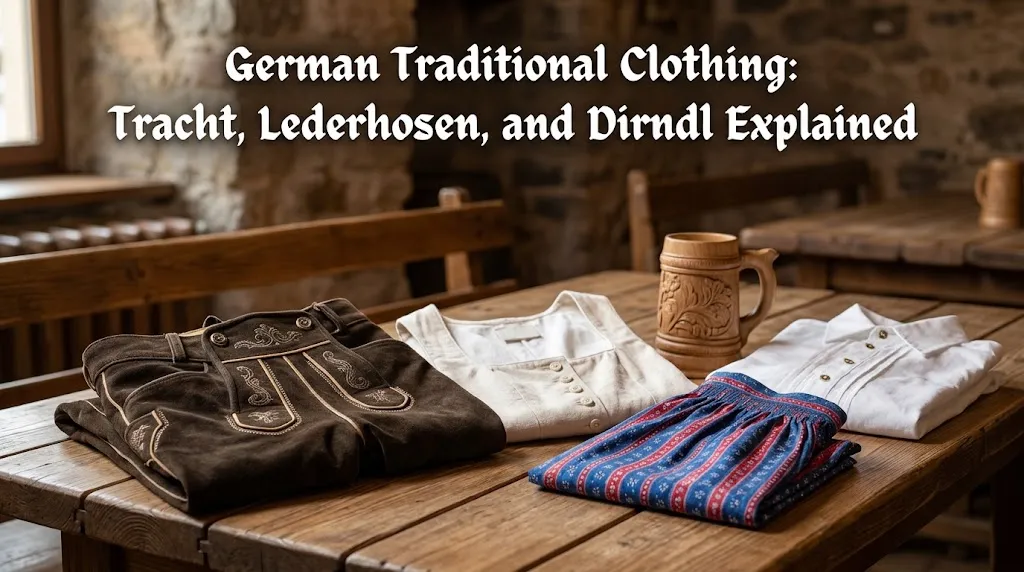
German traditional clothing is called Tracht. It’s the regional dress of Germany and Austria and the version most people picture comes from Bavaria. That means lederhosen for men and a dirndl for women.
You’ll mostly see it at Oktoberfest or a village festival these days. But there’s a lot more behind it than leather shorts and a checkered shirt. This post walks through what each piece is called and who wears what. It also shows how traditional pieces differ from a party costume and how to pick an outfit that suits the occasion.
What Is German Traditional Clothing?
Tracht is simply the German word for traditional dress. It covers the work clothes people wore in villages long ago and the dressier outfits that grew out of them. Every region had its own cuts and colors and trimmings. So there isn’t one single outfit. There are many different Trachten.
Bavarian Tracht is the one that travels best. It’s what most people mean when they say traditional German clothing at a festival. Lederhosen, dirndls, embroidered waistcoats and sturdy shoes all belong to it. If you’d like the cultural side first, our post on Bavarian attire being more than a costume is a good place to start.
Today wearing traditional clothing is mostly about heritage and a good time. People put it on for weddings and confirmations and village festivals. Plenty of families pass pieces down as an heirloom. Local clubs called Trachtenvereine keep the styles going in rural towns. You could think of them as Tracht societies. Earlier generations wore these clothes to work and to church. Over the last few centuries they slowly became the festive outfits people recognize today. That’s roughly how a 19th century work outfit turned into modern festival fashion. The practice has lasted because the clothes mean something to the people who wear them.
Here’s the thing that surprises a lot of first timers. Tracht isn’t dress up in the way a Halloween outfit is. In many Bavarian and Austrian towns a dirndl or a pair of lederhosen is simply what you put on for a proper celebration. That’s also why you’ll see grandparents and kids dressed alike at the same table. The clothes belong to the whole family and not just to one age group.
German Traditional Dress by Region
Germany isn’t one wardrobe. The south has the alpine look most visitors know and other parts of the country have their own folk styles. That regional diversity is the part most people miss.
Bavaria and the Alps
Bavaria sits in the south of Germany and its Tracht is the image behind most German Oktoberfest outfits. Men wear leather trousers and women wear a dirndl. Colors tend to stay earthy. You’ll see green and red and blue and black on dirndls and waistcoats. Embroidered flowers and oak leaves show up on trimmings. A flower motif on a bodice or a pair of suspenders is a small touch that people tend to notice.
Austria and Tyrol
Austria has a Tracht of its own and the two countries share a lot. Tyrol is especially known for its leather trousers and its hats. People often argue about who “owns” lederhosen. The honest answer is that it’s an alpine tradition across borders. We cover that debate in our post on whether lederhosen are German or Austrian.
Beyond the Alps
Not every region looks alpine. The Black Forest is known for the Bollenhut, a straw hat topped with pom poms. Other regions have their own caps and aprons and bodice styles. If you’re building a Bavarian look that’s fine to skip. It’s still good to know that German traditional dress is wider than one picture. A shopper in the US who sees a dirndl and a Bollenhut side by side might assume they’re from the same place. They aren’t. Knowing that makes you a lot more confident when you choose what to wear.
Traditional German Clothing for Men
A traditional German outfit for men is built from a handful of pieces. Each one has a name and a job. Here’s how they fit together.
| Piece | What it is | How it’s worn |
|---|---|---|
| Lederhosen | Leather trousers or shorts | The base of the outfit |
| Bundhosen | Longer lederhosen that end below the knee | Fastened at the knee with a band |
| Shirt | White or checkered Bavarian shirt | Under the waistcoat |
| Waistcoat | Trachten vest, often with trim | Over the shirt |
| Loferl | Knitted calf high socks | With shoes below the knee |
| Haferlschuhe | Sturdy lace up leather shoes | With Loferl |
| Hat | Alpine hat such as a Tirolerhut | With a pin or small feather |
Lederhosen and Bundhosen
Lederhosen are the star. Short pairs sit above the knee. Bundhosen run longer and close with a band at the knee called a Kniebund. They look similar but they feel different when you walk and sit. Our post on Bundhosen vs lederhosen breaks down which one suits which person.
Traditional German lederhosen often carry embroidery on the front panel and along the sides. Suspenders hold the trousers up and also tie the look together. If you’re after a classic pair of german traditional lederhosen the shape and the stitching tell you a lot before you read any label.
Shirt and Waistcoat
White shirts are the safe choice. Checkered shirts in red or blue or green add color. A Bavarian shirt usually has a slightly different cut from a normal dress shirt. We dig into the details in our Bavarian shirts post.
Then comes the waistcoat. Honestly it’s the piece that makes the outfit look finished. A plain shirt and trousers feel unfinished without it. Traditional waistcoats often have contrast trim and decorative buttons and sometimes a little embroidery. Pick a color that works with your shirt and keep the rest of your accessories calm so nothing fights for attention.
Socks, Shoes and Headwear
Loferl are the knitted socks that stop below the knee. Haferlschuhe are the traditional shoes made to go with them. Sneakers break the look right away. Our post on what shoes to wear with lederhosen covers your options.
Headwear is the fun part. A Tirolerhut has a crown that sits above a narrow brim and it’s usually decorated with a hat pin or a small feather. A Charivari is the decorative chain that hangs across the front of the trousers. It’s optional but it adds a nice touch. Think of it as the jewelry of the outfit. Hats and chains and pins can be added one at a time until it feels right to you.
Traditional German Dress for Women
A woman’s outfit is built around the dirndl. It looks like one dress but it’s really four things worn together. There’s a bodice and a blouse and a skirt and an apron.
The blouse sits under the bodice and its sleeves show at the shoulders. The bodice laces or hooks at the front. The skirt falls anywhere from knee length to a bit longer. The apron goes over the top and ties at the waist.
Tying the Apron Bow
The bow is the small detail everyone notices. Many people say the side you tie it on sends a message about relationship status. Whether or not you follow that custom it pays to learn how to tie it neatly. Our post on the apron bow shows the steps.
Dirndl or Women’s Lederhosen
Not every woman wants a dress. Women’s lederhosen and lederhosen skirts are part of the picture too. If you can’t decide between the two it helps to see the differences side by side. We explain them in lederhosen vs dirndl.
Accessories
Small bags and hair accessories and a pin or brooch finish the look. A girl or a woman can keep things simple with a plain blouse and one nice apron. The goal is a balanced outfit and not a crowded one. A dark green or blue dirndl pairs well with a white blouse. A black or red one looks sharp with a lighter apron. And if the bodice already has a lot of embroidery it’s usually better to keep the apron simple.
Traditional German Clothing for Kids
Kids wear the same pieces as adults in smaller sizes. Boys wear lederhosen with a shirt and sometimes a waistcoat. Girls wear a dirndl or a lederhosen skirt. Comfort matters more here. A child who’s itchy or too warm won’t last an hour at a festival. Our page on lederhosen for kids has more on sizing and style.
What a Traditional German Oktoberfest Outfit Looks Like
Oktoberfest is held on the Wiesn. That’s the nickname for the festival grounds in Munich. Most people at a German Oktoberfest dress in some form of Tracht even if they’re only visiting. Think of it as traditional German apparel for a big shared party. It’s how a whole crowd chooses to clothe itself for the same party.
A men’s German Oktoberfest outfit is lederhosen with a shirt and waistcoat and socks and shoes. A woman’s German Oktoberfest dress is a dirndl with a blouse and an apron. Those are the basics of traditional Oktoberfest clothing. You can mix in accessories like a hat or a bag.
German Oktoberfest apparel doesn’t have strict rules. But wearing a complete outfit tends to look and feel better than wearing one piece with everyday clothes. Outside Germany the same idea applies to festivals across the US. Many American towns hold their own Oktoberfest events and plenty of guests turn up in full Tracht. If you’re wondering whether you’ll stand out in a dirndl or lederhosen the answer is usually no. You’ll fit right in. People tend to appreciate the effort and a proper outfit often starts a conversation.
Authentic Pieces vs a German Costume
Walk through a party store in October and you’ll see plenty of German costume sets. They look fun. But they’re a different thing from traditional German attire made to be worn properly.
| Detail | Traditional style piece | Party costume |
|---|---|---|
| Material | Leather for lederhosen and natural fabrics for blouses | Often shiny synthetic fabric |
| Construction | Cut and stitched to fit the body | Loose one size cut |
| Embroidery | Sewn into the garment | Printed or glued on |
| Wear | Meant for repeated festivals | Meant for one party |
Why Leather Quality Matters
Leather is what separates real lederhosen from a costume. Genuine leather moves with you and softens over time and develops its own character. It also handles a long day of sitting and standing better than a stiff imitation.
There are easy ways to spot the difference. Real leather has a slightly uneven surface and a natural smell. Fake material looks too perfect and feels plastic. Our buyer’s tips for spotting fake lederhosen goes through it step by step.
At Lederhosen Outfit our lederhosen are made from genuine leather and made to order. We build them as high quality pieces in authentic Bavarian style. Every product page lists its own leather type and materials and construction details so check the individual product page before you buy.
How to Choose Your Outfit
Start with the occasion. A beer festival and a wedding ask for different levels of dressing up. After that pick the style that feels like you. Some people like a classic dark pair of lederhosen with a white shirt. Others prefer lighter leather and a bright checkered shirt. Neither is wrong. It comes down to how you want to feel when you walk into the room.
Fit comes next and fitting matters more than most people expect. A pair of lederhosen that fits well lets you move and sit and dance without tugging. Lederhosen should sit comfortably at the waist and let you sit down without pulling. A dirndl should feel snug but not tight at the bodice. And pick shoes you can stand in for hours.
Weather matters too. A waistcoat adds a layer on cool evenings and a lighter shirt helps on a warm afternoon.
Caring for Traditional Pieces
Let leather air out after wearing it. Keep it away from direct heat. If it gets damp let it dry naturally. Store dirndls and shirts on hangers and keep lederhosen somewhere dry. A little care keeps the whole outfit looking good for years. Shirts and blouses can usually be washed following their label. Leather is a different story and it’s best to follow the instructions that come with the piece. When in doubt ask the seller before you try any cleaner on it.
Common Mistakes to Avoid
Mixing costume pieces with traditional ones is the most common slip. It makes the outfit look uneven. Another is buying the wrong size and hoping it’ll stretch. And skipping the right shoes can undo an otherwise good look.
Final Thoughts on German Traditional Clothing
German traditional clothing is more than one outfit. It’s a mix of regional styles with Bavarian Tracht leading the way. Once you know the pieces it’s easy to put together a look that feels right. If you’re ready to start browse the Oktoberfest outfit collection and check each product page for its materials. Our pieces are made to order from genuine leather.
Recommended products
Black Lederhosen Suspenders with Bavarian Crest Embroidery
$66.00Authentic Dirndl Dress Traditional German Outfit
$225.00Traditional German Lederhosen in Dark Oak Brown
Price range: $107.10 through $126.00


Frequently Asked Questions
1. What is traditional German clothing called?
It’s called Tracht. Tracht means traditional dress and covers many regional styles. Bavarian Tracht is the best known abroad.
2. What do Germans traditionally wear?
It depends on the region. In Bavaria men wear lederhosen and women wear a dirndl. Most people wear these for festivals and special days now and not every day.
3. What is traditional German dress for women?
The dirndl is the best known piece. It includes a bodice and blouse and skirt and apron. Some women also choose lederhosen or a lederhosen skirt.
4. What is a traditional German outfit for men?
A classic outfit includes lederhosen and a shirt and a waistcoat. Loferl socks and Haferlschuhe shoes complete the lower half. A hat is an optional finishing touch.
5. Are lederhosen German or Austrian?
They belong to the wider alpine tradition. Both Bavaria and Austria wear them. Neither side has a single claim on them.
6. What should you wear to a traditional German Oktoberfest?
Most people wear Tracht. Men wear lederhosen and women wear a dirndl. Comfortable shoes make a big difference over a long day.
7. Can non Germans wear traditional German clothing?
Yes and many people do at festivals around the world. The key is to wear it with respect and treat it as real clothing. Learning the names and the basics goes a long way.
8. What is the difference between lederhosen and Bundhosen?
Lederhosen are usually shorter. Bundhosen are longer and close at the knee with a band. Both are leather trousers worn with the same shirt and waistcoat.
9. How do you tie a dirndl apron bow?
You wrap the apron ties around the waist and finish with a neat bow at the front. Many people say the side of the bow carries a meaning. Check the apron bow post for a step by step walkthrough.
10. How do you tell authentic from costume clothing?
Look at the material and the stitching and the embroidery. Real leather has a natural surface and smell while costumes often use shiny synthetic fabric. Check the product page for stated materials and construction details.
