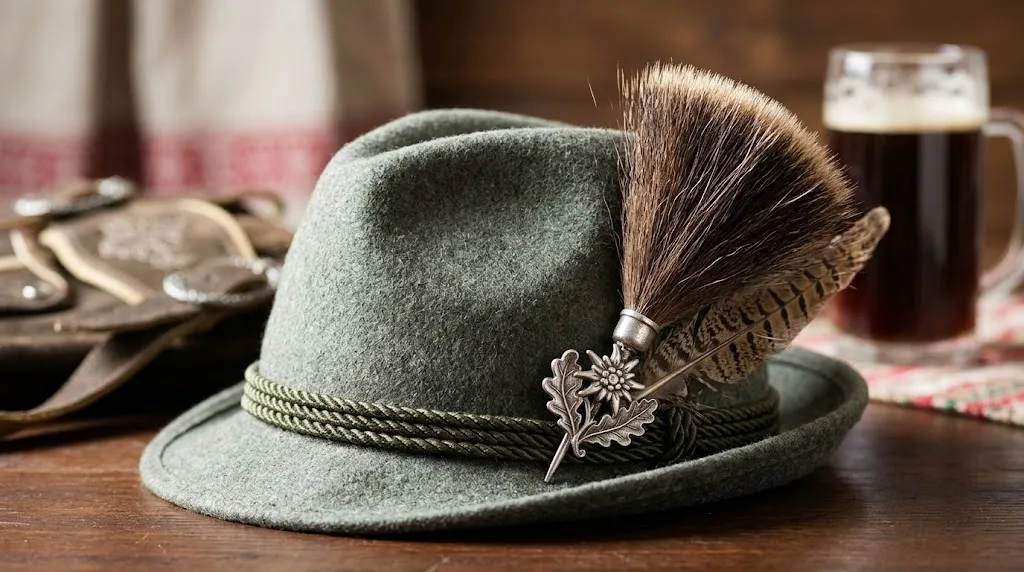

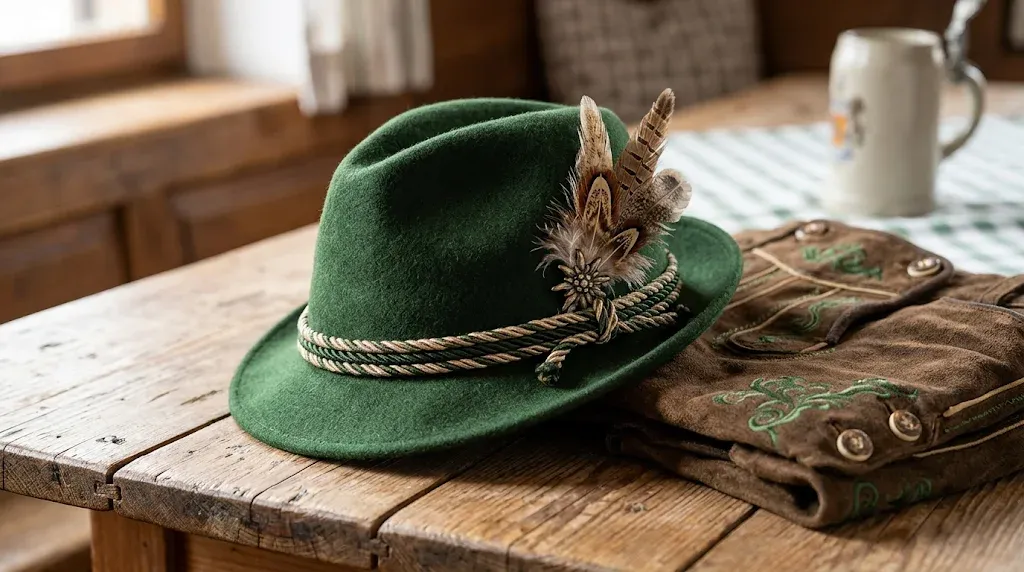
An alpine hat is a traditional felt hat from the Alps. It’s usually made of wool felt and it comes with a band and often a feather or a small brush tucked into the side. You’ll hear it called a Tyrolean hat or a Bavarian hat and sometimes just a German hat. The names overlap a lot and that’s where most of the confusion starts.
Here’s the plain version. If you’re putting together a lederhosen outfit for Oktoberfest you want a felt Tracht hat with a narrow or medium brim in a color that matches the rest of your clothes. Tracht simply means traditional Bavarian clothing and the hat is one piece of it.
This article sorts out the names first. Then it covers the parts of the hat and the common styles and how to pick one that fits. After that you’ll see how to wear it with lederhosen and how to look after it so it holds its shape. If you’d like the wider topic, our lederhosen hat article goes through it from another angle.
What Is an Alpine Hat?
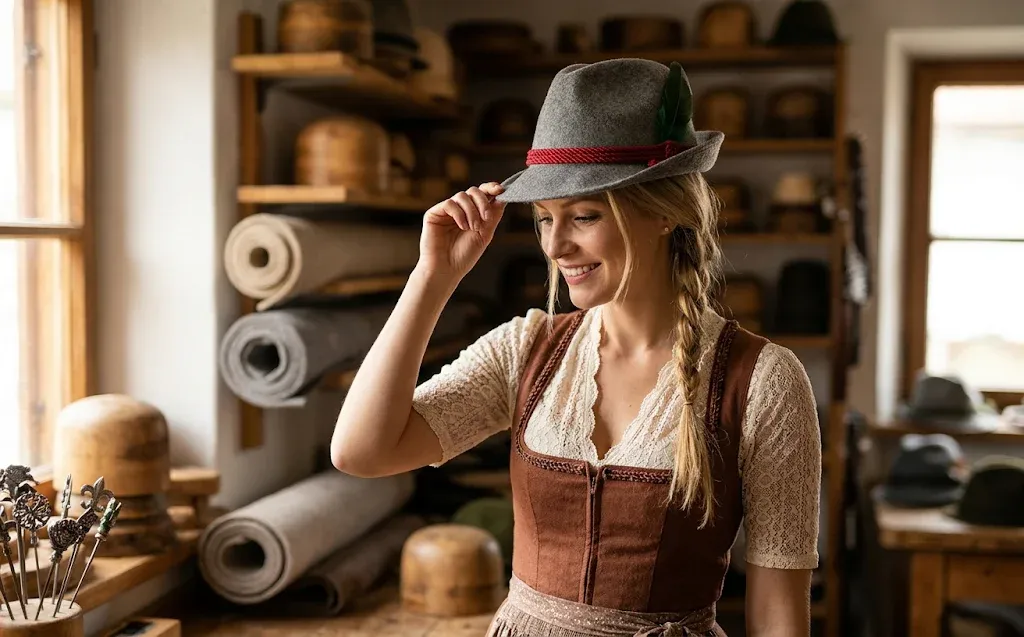
An alpine hat is a felt hat made for life in the mountains. The crown is usually dented or creased on top. The brim is fairly narrow. A band wraps around the base of the crown and a trim sits on one side. It’s a simple look and a slightly rugged one. That’s exactly why it works so well next to leather shorts and a checkered shirt.
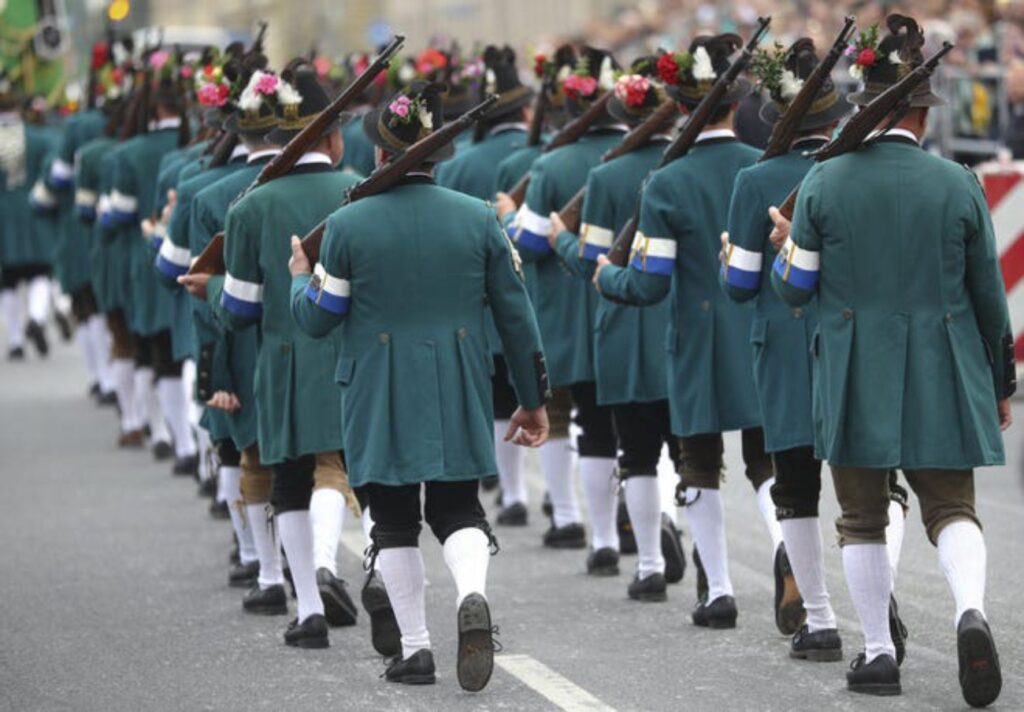
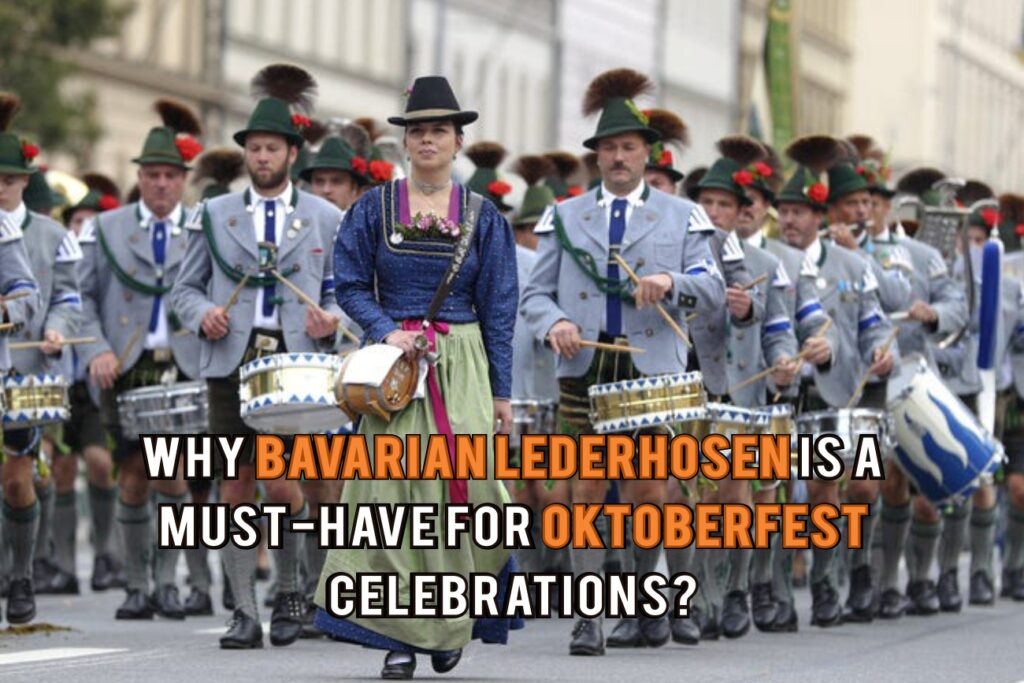
The Alps run through Germany and Austria and Switzerland so hats like this show up in all three. Bavaria sits in southern Germany right along the edge of the mountains. Over time the hat became part of local Tracht and today it’s one of the first things people think of when they hear traditional German alpine style. In German attire like lederhosen the hat is often the finishing touch.
Alpine Hat vs Tyrolean Hat vs Bavarian Hat
Honestly these names describe nearly the same hat. The difference is mostly where the word comes from and who’s using it. Tyrol is a region in Austria and Bavaria is a state in Germany. Shops and shoppers mix the names all the time.
| Name | How people use it | What it usually looks like |
|---|---|---|
| Alpine hat | A broad term for the traditional felt hat of the Alps | Wool felt crown with a dented top and a narrow to medium brim and a band |
| Tyrolean hat | A very common name in English | Similar shape with a cord band and a feather or brush on the side |
| Bavarian hat | Used when the hat is part of a Bavarian Tracht outfit | The same family of shapes worn with lederhosen or a dirndl |
| German hat | A casual catch all | Can mean any of the above |
| Trachtenhut | The German word for a hat worn with Tracht | Same style family |
| Tirolerhut | The German word for a Tyrolean hat | Same style family |
So if a seller says Tyrolean and your friend says Bavarian don’t worry about it. Look at the shape and the material instead of the label.
German Hats and Austrian Hats
If you’ve looked up German hats or Austrian hats you’ve probably noticed the results look alike. A German hat for Oktoberfest and an Austrian hat from a village in the Alps can share the same basic shape. What changes is the trim and the color and sometimes how loud the decoration gets. Tyrolean hats and Bavarian hats sit in that same family of shapes.
What’s the Lederhosen Hat Name?
There isn’t one official lederhosen hat name. People say lederhosen hat to mean whatever hat goes with the outfit. A German lederhosen hat is simply a Tracht hat worn with leather shorts. The same goes for the Oktoberfest hat name. Trachtenhut and Tirolerhut are the German words you’ll run into most often.
Tradition and Craft Behind the Bavarian Hat
Hats like this started out as practical headwear. Hunters and farmers in mountain villages needed something that handled rain and wind and cold. Wool felt suits that job because it insulates and it sheds light moisture. Hunting is closely linked to the look and you can still spot hunting style details on a lot of traditional Bavarian hats.
Over time the traditional hat picked up decoration and meaning. It turned into a symbol of regional pride and German heritage and it found a place in Bavarian fashion. Today it’s as much a festival piece as a working one. If you want the longer story you can read about the history behind the lederhosen hat.
The craft part is easy to overlook. A good felt hat gets shaped and finished with care. The band goes on neatly and the trim sits where it should. That’s part of why the style still feels timeless.
What Makes Up a Traditional Alpine Hat
Every alpine hat has the same handful of parts. Knowing them makes it much easier to tell a well made hat from a flimsy one.
| Part | What it does | What to look at |
|---|---|---|
| Crown | Holds the shape and sits on your head | Even felt and a clean crease on top |
| Brim | Gives shade and frames your face | Narrow brimmed or wide brimmed to suit your look |
| Band | Wraps the base of the crown | Cord or ribbon in a color that works with your outfit |
| Trim | Decorates the side | Feather or brush or pins kept in proportion |
| Lining | Sits against your head | Comfort and a neat finish inside |
Wool Felt
Wool felt is made by pressing wool fibers together until they bind. It’s warm and it holds a shape well. That’s why wool alpine hats are the classic choice and why a felt hat suits cool weather. A well made one can be durable if you look after it. Thin or floppy felt tends to lose its shape faster.
A felt cap is a softer and shorter cousin of the alpine hat. It’s handy but it doesn’t give the same classic alpine outline.
Band and Cord
The hatband is the strip around the base of the crown. On many Tyrolean styles you’ll see a twisted cord there. Others use a flat ribbon band. For a lot of people a cord reads as more traditional while a ribbon can look cleaner. Neither is wrong. Pick the one that fits the rest of your outfit.
Feather and Pin Details
The trim on the side is where a hat gets its distinctive personality. A small feather tucked into the band is the easy choice. Some hats carry a brush that looks like a little shaving brush. The traditional version is called a Gamsbart and it’s a tuft of chamois hair. Plenty of hats use lookalike trims instead so check what’s actually on the hat if that matters to you.
Pins are the other option. Small metal pins let you decorate the band and you can add them over time. Keep the whole thing modest. One feather or one brush and a few pins usually looks better than a crowded side.
Brim Shape
A narrow brimmed hat gives the classic alpine look. A wide brimmed hat gives more shade and a looser feel. At Oktoberfest the narrow brim is easier in a crowded tent because it doesn’t bump into things. That’s a styling opinion and not a rule.
Alpine Hat Styles and Colors
Classic Green Felt
Green felt is the look most people have in mind. It pairs well with brown leather and with white or red checkered shirts. It’s versatile and if you only buy one hat this is the one that rarely feels out of place.
Brown, Gray and Black
Earth tones are easy to wear. Brown blends with leather. Gray feels a bit more modern and it looks stylish with darker leather. Black is dressier and it can look sharp with a darker waistcoat. Pick based on what else you’re wearing and don’t fight the color of your lederhosen.
Winter Hats and Fleece Lined Options
Some alpine hats come fleece lined for colder days. They suit winter festivals and cool evenings. If you’re heading to an outdoor event late in the season a fleece lined felt hat adds warmth without losing the traditional shape.
Oktoberfest Hat vs Everyday Alpine Hat
An Oktoberfest hat tends to be more decorated. Think extra pins and a bigger feather. An everyday alpine hat stays plainer. Both are fine. The difference is mood. Festival hats are about celebration and festivity and flair while everyday ones are easier to wear again. Novelty costume hats are a different category. They’re fun for a party but they don’t have the same traditional look as a real felt hat.
How to Choose an Alpine Hat
Here’s a simple way to narrow it down.
- Start with the occasion. A beer tent at the Wiesn (the local name for Oktoberfest in Munich) calls for something different than a quiet village festival.
- Match the outfit. Pick a hat color that echoes your lederhosen or your waistcoat or your shirt.
- Check the material. Look for wool felt and read the label before you buy.
- Get the size right. More on that below.
- Keep the decoration in proportion. One focal point is enough.
Alpine Hat Size and Fit
Measure around your head with a soft tape just above your eyebrows and ears. Compare the number with the seller’s size chart. Every maker sizes a little differently so use the chart for that exact hat. If you land between sizes check what the seller recommends. A hat that sits too high looks like it’s balancing up there. One that’s too tight gives you a headache by lunchtime.
Matching Hat Color to Your Lederhosen Outfit
Pick one color from your outfit and repeat it in the band or the trim. Brown lederhosen with a green hat and a green band tends to look put together. A red checkered shirt can pair with a hat that has a touch of red in the trim. You don’t need to match everything exactly. Echo the colors and don’t copy them.
| Occasion | Hat style that suits | Why |
|---|---|---|
| Oktoberfest tent | Green felt Tyrolean alpine hat with a narrow brim | Classic look and easy to wear in a crowd |
| Outdoor festival in cool weather | Fleece lined felt hat | Extra warmth |
| Village or folk event | Plain wool alpine hat with a cord band | Lets the outfit lead |
| Photos or a dress up party | Decorated festival hat | More flair |
| Everyday wear | Brown or gray felt hat | Easy to pair |
If you’re still deciding, there’s more on picking a hat for Oktoberfest.
Wearing an Alpine Hat With Lederhosen
For Men
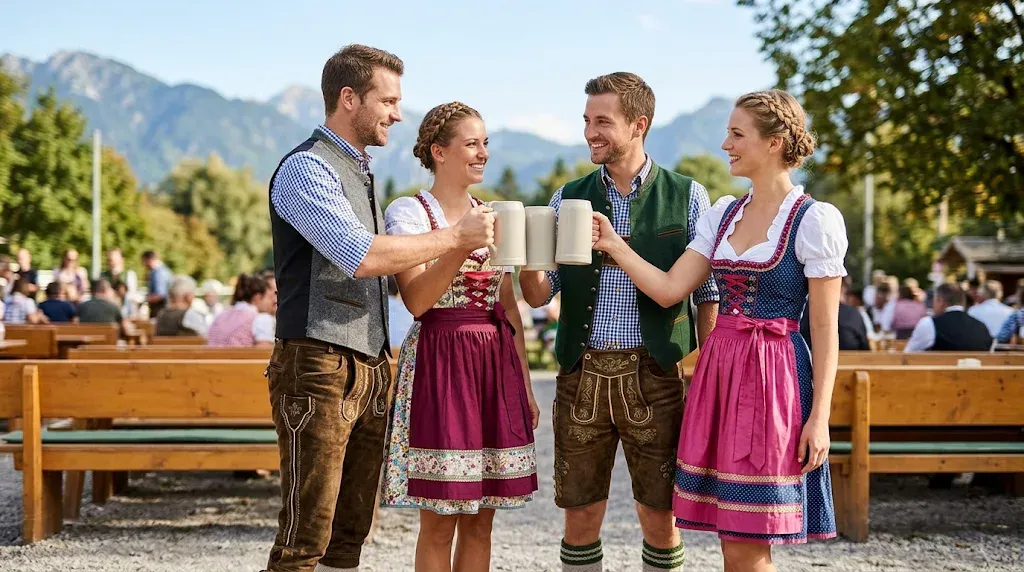
A man in lederhosen and a green felt hat doesn’t need much more to look the part. Lederhosen for men usually come in brown tones and those suit green felt well. Most people pair German lederhosen with a felt hat for lederhosen Oktoberfest outings and a darker pair of Oktoberfest lederhosen works nicely with a gray one too. Lederhosen and hat just go together when the colors talk to each other. It’s an authentic German look without much effort. The usual outfit is lederhosen and a Bavarian shirt and a trachten waistcoat. Add Loferl (calf warmers or socks that cover the lower leg) and Haferlschuhe (the traditional brown leather shoes worn with Tracht) and suspenders. The hat finishes it. Some people also hang a Charivari from the waistband. That’s a decorative chain and it’s optional. If you prefer knee length Bundhosen the hat works the same way.
At Lederhosen Outfit, our men’s lederhosen are made from genuine leather and made to order. So you can build the rest of the German Oktoberfest outfit around them.
For Women
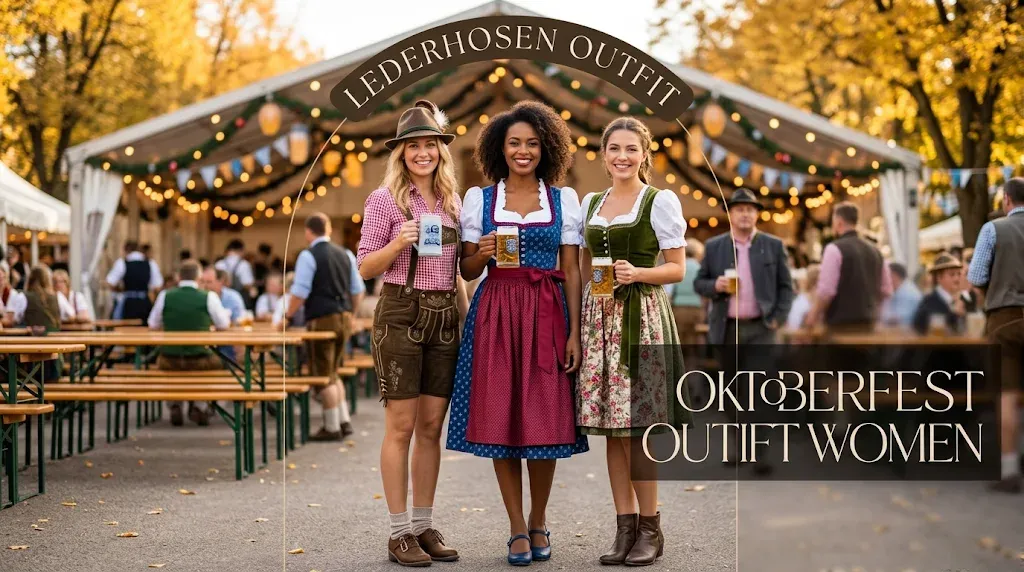
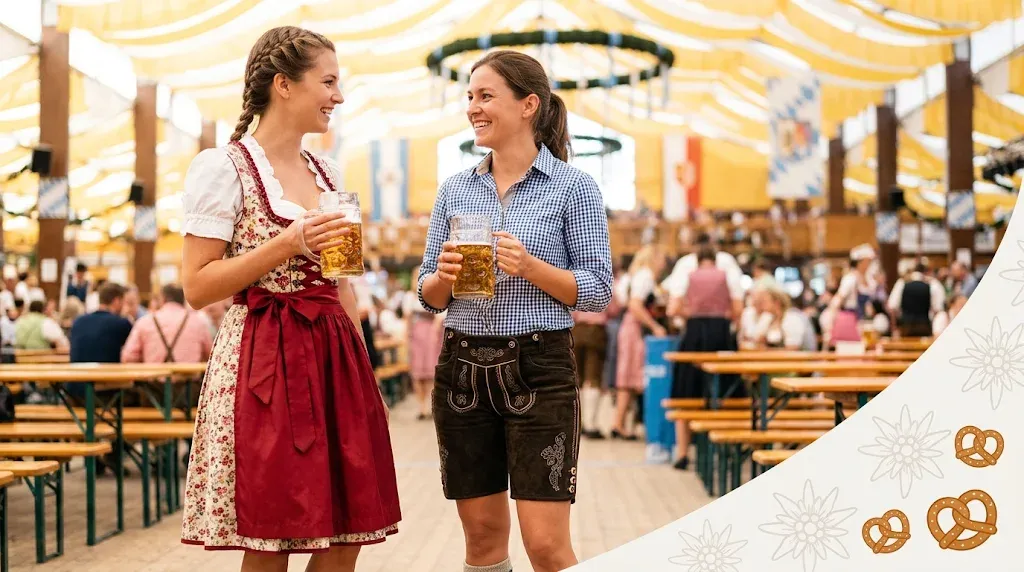
Women wear alpine hats too. With women’s lederhosen or a dirndl a smaller felt hat with a lighter trim keeps things balanced. Dirndl outfits often carry a lot of color already so a simpler hat usually works better.
For Kids
Kids can wear the same style. Measure the head the same way and check the chart. Kids’ heads change fast so a hat that fits now may not fit next season. A small felt hat looks great with boys’ lederhosen.
A Quick Outfit Checklist
- Lederhosen or Bundhosen
- A Bavarian shirt in white or checkered
- A trachten waistcoat if you want a dressier look
- Loferl or knee high socks
- Haferlschuhe
- Suspenders
- The hat with a band and one trim that echoes another color in your outfit
Common Alpine Hat Mistakes and How to Fix Them
| Mistake | Why it clashes | Easy fix |
|---|---|---|
| Wrong size | The hat slides down or sits too high | Measure and check the size chart |
| Oversized feather | It competes with the rest of the outfit | Pick one modest trim |
| Costume hat with an authentic outfit | It looks mismatched | Choose real felt with a proper band |
| Band color clash | It pulls the eye away from everything else | Echo a color from your shirt or waistcoat |
| Wearing it pushed far back | It looks loose and unsettled | Set it level with the brim just above your eyebrows |
For more on getting the look right, read how to wear an authentic lederhosen hat.
Caring for a Wool Felt Alpine Hat
Brush it gently with a soft brush. If it gets wet let it dry naturally and keep it away from direct heat because heat can warp felt. Store it crown up or on a hat stand so the brim doesn’t flatten. Keep the feather and pins from getting crushed. There’s more in these care tips for felt hats.
What to Check Before You Buy
Whether you’re buying a hat or the lederhosen that go under it the same habit helps. Read the material details before you click buy. For a hat check that it says wool felt. Look at the size chart and see how the band and trim are attached. Check the lining too since that’s what sits against your head all day. And read the seller’s return policy before you order.
Leather matters even more when you’re buying lederhosen. Genuine leather feels different from imitation. It flexes and creases the way a natural material does and it softens as you wear it. How it ages is half the fun because genuine leather picks up character over time. Imitation tends to look uniform and it can feel stiff in a different way. Stitching and embroidery and hardware all show up in the details so look closely at the photos and descriptions.
At Lederhosen Outfit, our lederhosen are made from genuine leather and made to order. We care about high quality materials and authentic Bavarian style. Check the individual product page for its stated leather type and materials and construction details. If you’re shopping for the full outfit you can also browse our Bavarian accessories.
Recommended products


Frequently Asked Questions
1. What is an alpine hat?
An alpine hat is a traditional felt hat from the Alps. It’s usually made of wool felt and it has a band and often a feather or brush on the side. People wear it as part of Tracht at festivals like Oktoberfest.
2. Is a Tyrolean hat the same as a Bavarian hat?
They’re very close. Tyrolean points to Tyrol in Austria and Bavarian points to the Bavarian style but both describe the same family of felt hats. When you shop look at the shape and material instead of relying on the name.
3. What hat do you wear with lederhosen?
A felt Tracht hat like an alpine or Tyrolean hat is the usual choice. Pick a color that matches your lederhosen or shirt or waistcoat. Keep the trim modest so the outfit stays balanced.
4. What is the German hat for Oktoberfest called?
In German it’s often called a Trachtenhut or a Tirolerhut. In English people say Bavarian hat or Tyrolean hat or alpine hat. The names overlap so the exact word depends on who you ask.
5. What is an alpine hat made of?
Most traditional alpine hats are made of wool felt. Some come fleece lined for colder weather. Check the material label before you buy since it tells you what you’re getting.
6. What does the feather or brush on an alpine hat mean?
It’s a traditional decoration and a way to add personality. The brush style trim is often called a Gamsbart and it’s a tuft of chamois hair. Meaning can vary from region to region so treat it as style more than a strict code.
7. How do I choose the right alpine hat size?
Measure around your head just above your eyebrows and ears with a soft tape. Compare that number with the seller’s size chart for the exact hat. If you land between sizes follow the seller’s advice.
8. Can women wear an alpine hat?
Yes. It works with a dirndl or with women’s lederhosen. Choose a lighter trim and a color that echoes the outfit.
9. Can Americans wear an alpine hat at Oktoberfest?
Yes and plenty of people do. Authentic styles tend to look better than novelty costume hats. You can read more about Americans wearing lederhosen if you’re wondering about the cultural side.
10. How do I care for a wool felt alpine hat?
Brush it gently with a soft brush. Let it dry naturally if it gets wet and keep it away from direct heat. Store it crown up or on a stand so the brim keeps its shape.
Final Thoughts
An alpine hat is simple once you cut through the names. Tyrolean and Bavarian and German all point to the same kind of felt hat from the Alps. Pick wool felt and get the size right and match the band to your outfit. That’s most of it. And if you’re shopping for the lederhosen themselves check the product page for materials and construction before you decide.