
So what’s a typical German outfit? It depends on where you are and what’s going on. Day to day, modern German clothing looks a lot like what people wear in the US. Jeans. Sweaters. A jacket for the weather. But when someone says traditional German clothing they usually mean Tracht, the regional dress of southern Germany and the Alpine regions. That’s where lederhosen and dirndl come from.
This article walks through each piece for men and women. It also explains how people wear them at festivals like Oktoberfest.
What Is a Typical German Outfit?
Here’s the thing. Germany doesn’t have one national costume. Each region built its own look over time and every version has its own details. Bavaria gets most of the attention outside Germany. But even Hesse has its own traditional dress and so does Tyrol just across the border.
Traditional German Clothing Explained: Tracht and Trachten
Tracht is the German word for traditional dress tied to a region or a community. The plural is Trachten. You’ll see the word used for workday garments and festive ones alike.
Most of these pieces were originally worn for farm and mountain work. The festive versions came later and picked up more embroidery and richer fabric. That’s the part most people miss. Traditional clothes weren’t designed as party outfits.
These days Tracht works like wearable cultural heritage. It ties into Bavarian culture and local cultural identity far more than it ties into German fashion trends. And that’s why a dirndl from one valley can look quite different from one made two valleys over.
Modern German Attire in Everyday Life
Modern German attire is pretty simple. Most people dress for comfort and for the weather. Layers are normal because the weather can change fast.
Some people mix the two worlds. A modern outfit with one Tracht piece like a waistcoat or a wool jacket is common. It’s a quiet way to nod to the region without going full costume. And honestly it’s a nice trick if you’re not ready to commit to a whole traditional look.
Tracht isn’t everyday wear for most people. Nobody strolls through Munich in lederhosen on a normal Tuesday. You’ll see it at weddings and family events and festivals. So if you’re visiting and wearing regular clothes you won’t stand out. And if you’re heading to a folk festival the dress code shifts completely.
Typical German Outfit for Men: Lederhosen and Trachten Attire
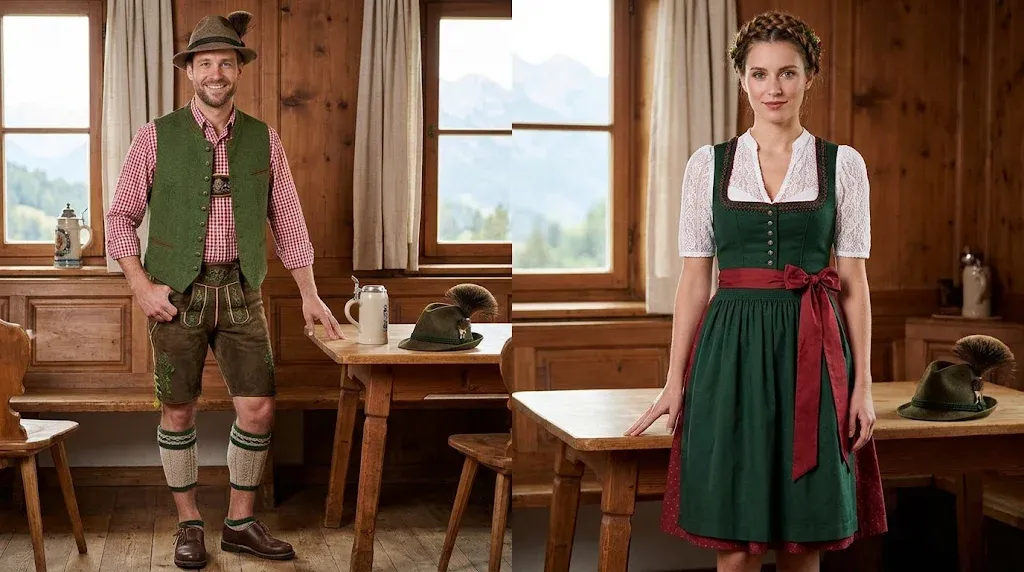
A typical German outfit for men in Bavaria starts with lederhosen. Add a shirt and a waistcoat and socks and shoes. That’s the base. Everything else is detail.
Lederhosen vs Bundhosen
Lederhosen are the short leather trousers most people picture. Bundhosen are the longer version. They sit at knee length and finish with a Kniebund which is a fastening just below the knee. Some people call them breeches.
Both belong to the same Tracht family. Short and long cuts just suit different tastes and different weather. If you’re stuck between the two this bundhosen vs lederhosen breakdown helps.
Lederhosen for men have a look that’s hard to mistake. The leather is cut with a front flap and often carries embroidery on the front panel and along the sides. That’s one reason people keep them for years and treat them like a favorite jacket. They feel stiff at first. They soften as you wear them and that’s part of the charm.
Bavarian Shirt, Trachten Waistcoat and Janker
The shirt matters more than people expect. A classic checker pattern in red or blue is the usual pick. Plain white works too. Linen is a popular fabric because it’s breathable on a long festival day. If you want help choosing, here’s a page on picking a Bavarian shirt.
Over the shirt goes a trachten waistcoat. Velvet and suede and plain wool versions all exist. A Janker is the jacket version. It’s usually made from wool or loden which is a dense wool fabric from the Alpine regions. You’ll want it on cooler evenings.
Loferl Socks, Haferlschuhe, Tirolerhut and Charivari
These four words confuse a lot of first timers. So here’s a quick rundown.
Loferl are knitted wool socks or calf warmers worn with lederhosen. Haferlschuhe are sturdy shoes with laces and they’re made for walking. Our post on what shoes to wear with lederhosen goes deeper. A Tirolerhut is the felt hat from Tyrol and it often carries a feather or a brush. A Charivari is the decorative chain that hangs from the front of the trousers. People clip charms and small keepsakes onto it.
Suspenders hold everything in place. Many pairs show embroidery across the chest piece too.
Men’s Outfit Pieces at a Glance
| Piece | What it is | Pairs with | Occasion |
|---|---|---|---|
| Lederhosen | Short leather trousers | Checker shirt and waistcoat | Festivals and weddings |
| Bundhosen | Knee length leather trousers with a Kniebund | Janker and Loferl | Cooler days and formal events |
| Bavarian shirt | Checked or plain shirt | Waistcoat and suspenders | Almost every Tracht look |
| Trachten waistcoat | Velvet or suede or wool vest | Shirt and Charivari | Festivals |
| Suspenders | Straps with an embroidered chest piece | Lederhosen | Daily festival wear |
| Loferl socks | Knitted wool socks or calf warmers | Haferlschuhe | All seasons |
| Haferlschuhe | Sturdy lace up shoes | Lederhosen or Bundhosen | Long walking days |
| Tirolerhut | Felt hat with a feather or brush | Janker | Outdoor events |
| Charivari | Decorative chain with charms | Lederhosen | Festive looks |
Typical German Outfit for Women: Dirndl and Women’s Lederhosen
Women wear dirndls for most festive occasions in Bavaria. But it’s not the only option.
Dirndl Dresses Explained: Bodice, Blouse, Skirt and Apron
A dirndl has four parts. There’s a fitted bodice and a full skirt. A blouse goes underneath and an apron goes on top.
The blouse is where you’ll see lace or puffed sleeves. Some dirndl dresses have a deep neckline and others sit higher. A shawl adds warmth on cool nights. Some regional Tracht also includes a headdress though that’s rare at big festivals. Many pieces carry intricate embroidery or Alpine motifs like flowers.
Elegance comes from the details. The fit at the waist and the length of the skirt and the apron fabric all shape the look. Some styles feel chic and modern. Others stay close to the old village look.
Length is a personal call. A shorter skirt feels playful and easy for dancing. A longer one feels more formal and suits weddings and evening events. Colors matter too. Deep greens and reds and blues feel traditional while softer shades lean modern. There’s no wrong answer as long as the pieces fit well and feel comfortable.
Women’s Lederhosen and Skirts
Dirndl isn’t the only choice. Women’s lederhosen exist too and so do leather skirts. If you’ve wondered what they are exactly this explanation of women’s lederhosen covers it. Pair them with a blouse and a waistcoat and you’ve got an outfit that works for dancing and long tables alike.
The Apron Bow and What It Says
Here’s a fun one. In many traditions the position of the bow tied on the apron hints at relationship status or marital status. Left usually means single and right means taken. Plenty of people treat it as a light custom today. Others take it seriously.
Either way it’s worth learning before you tie yours. This walkthrough on tying the apron bow shows the steps. Add a small bag to complete the look and you’re set.
Kids’ Traditional German Outfits
Kids can wear scaled down versions of lederhosen and dirndl. Fit matters more than fuss because kids move all day. Breathable fabric and comfortable shoes make a long festival easier for them. And matching the family’s look makes for good photos. Kids also grow fast so many families pick sizes with a little room and adjust the straps. It keeps the outfit comfortable through the whole day.
German Oktoberfest Outfit: What People Wear at the Wiesn
Wiesn is the local nickname for the Oktoberfest grounds in Munich. What people wear there is mostly Tracht. A German Oktoberfest outfit for men means lederhosen and a checked shirt. For women it usually means a dirndl.
For a men’s German Oktoberfest outfit the usual build is lederhosen and a checker shirt and a waistcoat and Loferl socks and Haferlschuhe. A hat and a Charivari finish it. Men’s Oktoberfest attire follows the same pattern whether you pick lederhosen or Bundhosen. The Oktoberfest guy outfit that works best is the one that fits properly.
For women the traditional German Oktoberfest outfit is a dirndl with a blouse and an apron. An Oktoberfest outfit for women can also be women’s lederhosen. Searching for Oktoberfest clothing womens styles usually leads to dirndl dresses first. And a women’s Oktoberfest outfit looks best when the blouse and apron and bodice work together in tone. Whatever you pick the Oktoberfest spirit is about joining in and having a good time.
Weather deserves a thought too. Days can be warm and nights can turn chilly. A waistcoat or a Janker or a shawl handles that nicely. Wool socks help on cold evenings and breathable fabric helps on warm afternoons. Comfortable shoes matter more than most people expect since you’ll be on your feet for hours.
Authentic Tracht vs Costume Look
Plenty of Oktoberfest outfits sold online are party costumes. They look close from far away. Up close the cut and the fabric and the stitching tell a different story. This post on authentic Oktoberfest outfits vs costumes goes into more detail.
| Feature | Tracht style | Party costume look |
|---|---|---|
| Cut | Tailored with traditional lines | Loose and generic |
| Fabric | Leather and wool and linen | Thin synthetic blends |
| Embroidery | Detailed motifs | Printed or minimal |
| Fit | Made around the body | One size style |
| Accessories | Loferl and Haferlschuhe and Charivari | Plastic extras |
| Best for | Festivals and weddings | One off costume parties |
Bavarian and Alpine Differences
Bavaria and Tyrol share a lot. Still the details change from valley to valley. Colors and trims and even the way a jacket closes can differ from one village to the next. Hat shapes differ. So do embroidery patterns and apron colors. Across Germany you’ll find dozens of local looks and each one has its own story.
If you’re dressing for Oktoberfest in Munich the Bavarian style is the safe pick. If you’re heading to an Austrian event it’s worth looking at local photos first.
How to Build a Traditional German Outfit Step by Step
Start simple. You don’t need every accessory on day one.
Think about the event first. A beer hall evening and a wedding and a family photo all call for slightly different looks. Once you know the setting the choices get easier.
- Pick your base: lederhosen or Bundhosen for men and a dirndl or women’s lederhosen for women.
- Choose a shirt or a blouse that fits the base.
- Add a waistcoat or a bodice layer.
- Add Loferl or wool socks and Haferlschuhe.
- Finish with suspenders and a hat and small details like a Charivari.
Here’s a quick way to decide. If you like a short cut and an easy look go with lederhosen. If you want knee length coverage choose Bundhosen. If you prefer a dress go with a dirndl. And if you want something between the two look at women’s lederhosen or a skirt.
Fit comes first. Our lederhosen size help walks you through measuring. At Lederhosen Outfit, our lederhosen are made from genuine leather and made to order. Check the individual product page for its stated leather type and materials and construction details. You can browse lederhosen for men or look through dirndl dresses in our online store.
What to Look for in Genuine Leather and Craftsmanship
Leather matters because it’s the heart of the outfit. It affects comfort and how the pieces age and how they hold up through a festival weekend. Good leather softens with wear and develops its own character.
At Lederhosen Outfit we use genuine original leather and we stand behind high quality pieces in authentic Bavarian style. That’s our commitment. Each product page lists its details so you can check before you buy.
Here’s what to look for on any authentic lederhosen:
- Clear leather description on the product page
- Even stitching along the seams
- Embroidery that’s neat and stays flat
- Lining and hardware that feel solid
- Sizing options that match your measurements
Want a deeper look at spotting the real thing? Here’s how to identify genuine leather lederhosen. Craftsmanship shows in the small things. A well made garment looks tidy inside and out.
Common Mistakes With Traditional German Outfits
Mixing regions is the first one. A Tyrolean hat on a Bavarian look isn’t wrong exactly. But it can look off to locals. Another is tying the apron bow on the wrong side without realizing it says something. And buying a costume when you wanted real Tracht is a big one.
Then there’s fit. Lederhosen that are too tight or too loose never feel right. Suspenders that slip are annoying all day. And shoes that aren’t broken in can ruin a long festival. The fix is simple. Learn the pieces and check the details and pick what suits your event. A little prep goes a long way.
One more thing. Don’t stress about perfection. Locals are usually happy to see people making an effort and most will point you in the right direction if you ask. A friendly attitude is part of the outfit too.
Recommended products
Elegant Traditional German Clothing Male Lederhosen
Price range: $122.40 through $144.00Sterling Manor Oktoberfest Vest
$80.00Tyrolean Dark Oak Classic Lederhosen
Price range: $140.25 through $165.00


Frequently Asked Questions
What is a typical German outfit?
Everyday German dress is modern and casual. Traditional dress is regional Tracht. Lederhosen and dirndl are the best known Bavarian examples.
What is traditional German clothing called?
It’s called Tracht and the plural is Trachten. Each region has its own version. Dirndl and lederhosen are two familiar examples.
What do German men wear traditionally?
Men usually wear lederhosen or Bundhosen with a shirt and a waistcoat. Loferl socks and Haferlschuhe finish the look. A hat is optional.
What do German women wear traditionally?
Women commonly wear a dirndl with a blouse and an apron. Women’s lederhosen are another option. Many people add a shawl or a small bag.
What is a typical German Oktoberfest outfit?
For men it’s lederhosen with a checker shirt and a waistcoat. For women it’s a dirndl with a blouse and an apron. Both usually include traditional socks and shoes.
Is lederhosen everyday German clothing?
Not for most people. It’s regional and tied to events like festivals and weddings. You’ll see it far more in Bavaria than elsewhere.
What is the difference between lederhosen and Bundhosen?
Lederhosen are short and Bundhosen reach the knee with a Kniebund. Both belong to the same Tracht tradition. The choice usually comes down to taste and weather.
Can non Germans wear traditional German clothing?
Yes at festivals and events it’s widely seen as welcome. Wearing it respectfully and correctly is generally seen as culturally appropriate. Learning the basics like the apron bow helps.
What shoes and socks go with lederhosen?
Haferlschuhe and Loferl or wool socks are the traditional pair. They suit the leather and handle long days. Our shoe post goes into more detail.
How do I choose the right size for lederhosen or dirndl?
Measure carefully and compare with the size options on the product page. Fit matters a lot with leather pieces. Check the sizing details before you order.
Final Thoughts
A typical German outfit isn’t one thing. It’s a mix of regional Tracht and everyday modern clothes and a few Bavarian classics that the world knows well. Start with the base piece. Add the details that suit you. And wear it with respect and a bit of fun.
