
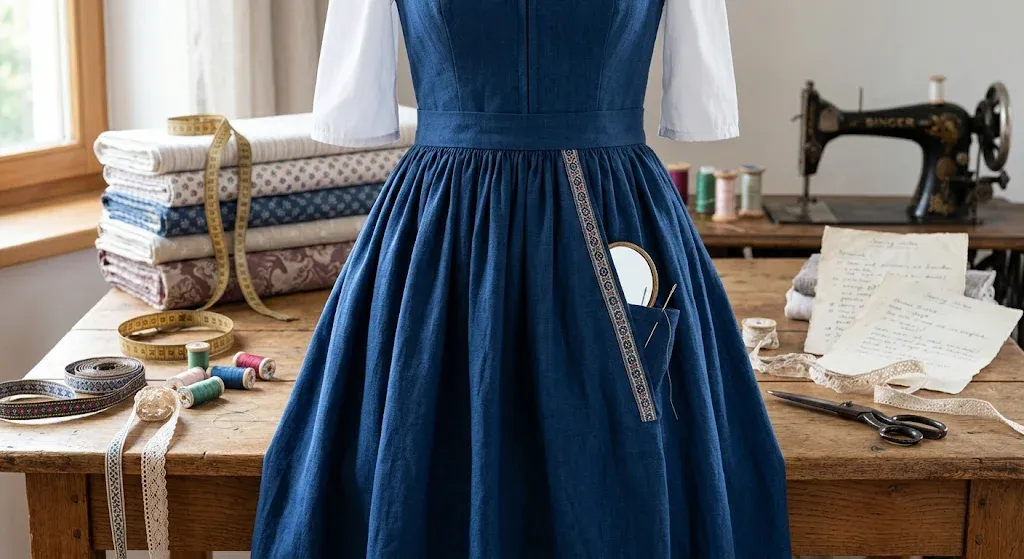
A dirndl skirt is the full skirt of a traditional dirndl. It’s gathered at the waist and it sits under the apron where it meets the fitted bodice. That’s the short answer. The longer answer covers pleats and pockets and length and fabric. It also covers how to sew one yourself if you like a weekend project.
Maybe you’re shopping for a dirndl dress and you’re not sure what a good skirt looks like. Maybe you sew and you want a folk project that isn’t another tote bag. Or maybe you’ve watched women in dirndl at a festival and wondered why every skirt looks a little different. Any of those works here. If you’d like the history of the dress first, this page on what a dirndl means and where it comes from is a good place to start.
What Is a Dirndl Skirt?
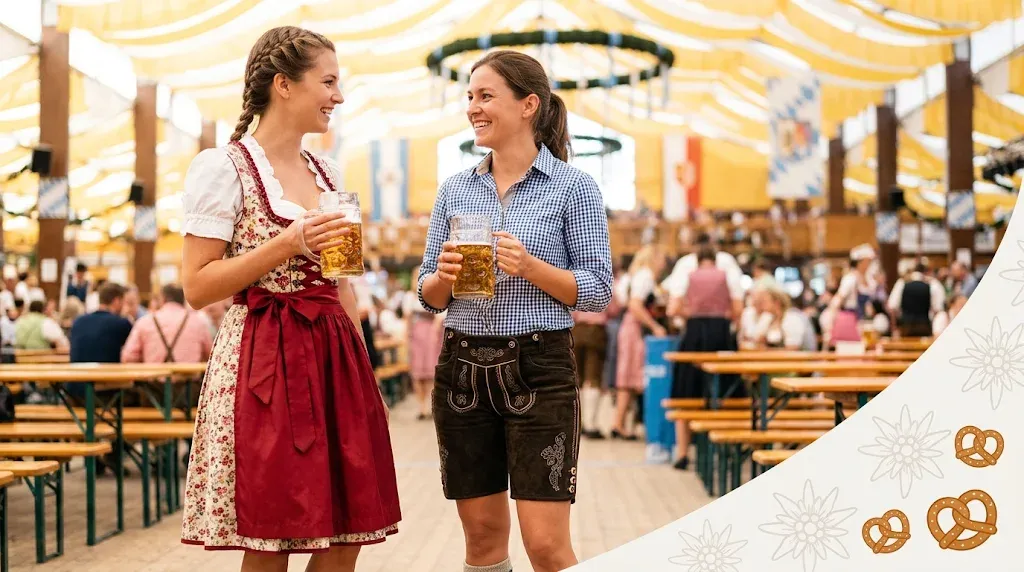
A dirndl is a traditional dress from Bavaria in Germany and from Austria. It’s traditional Bavarian clothing with deep roots. It’s built from four pieces. There’s a fitted bodice called the Mieder and a blouse called the Bluse. Then come the skirt (the Rock) and the apron (the Schürze). The whole outfit belongs to Tracht, which is the German word for traditional regional dress. The plural is Trachten.
The skirt does more work than people give it credit for. It sets the length and the shape from the waist down. It also decides how the dress moves when you walk or dance.
Most dirndl dresses are sold as a set with a matching apron and many include the blouse too. A few sellers list the skirt and the blouse and the apron as separate pieces so you can mix patterns. Always check the product page for what’s actually in the set.
| Part | German name | What it does |
|---|---|---|
| Bodice | Mieder | Fitted top that shapes the waist and often laces up the front |
| Blouse | Bluse | Usually white and worn under the bodice |
| Skirt | Rock | Full skirt gathered at the waist that sets the length and the movement |
| Apron | Schürze | Tied over the skirt and holds the bow |
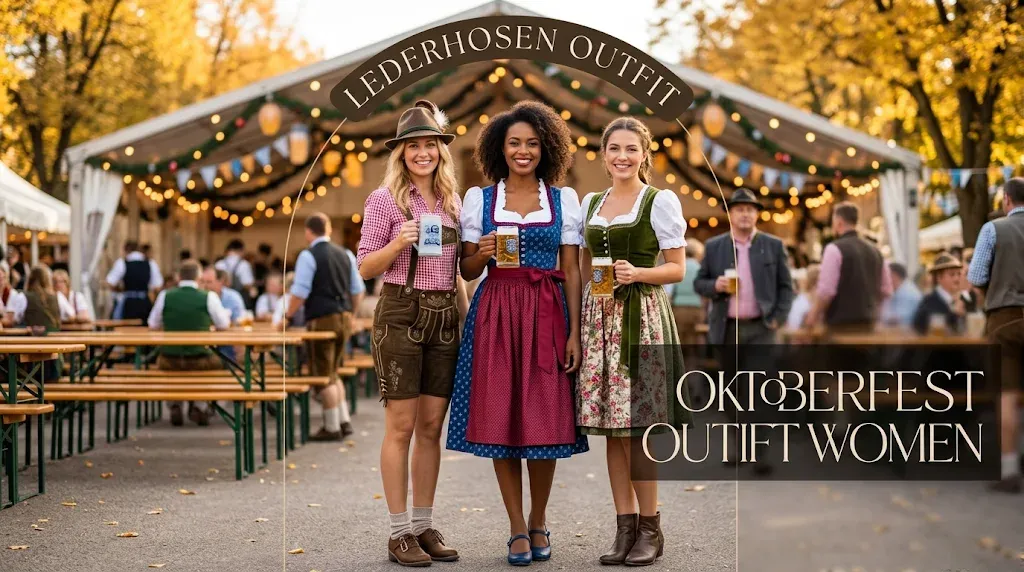
One thing trips people up on our site. We also sell lederhosen skirts and they’re a different thing. A dirndl skirt is fabric and it belongs to a dress. A lederhosen skirt is a standalone skirt inspired by traditional lederhosen. You’ll find a side by side comparison further down.
Dirndl Skirt Details: Pleats, Gathers, Waist Seam and Pocket
Small details change how a skirt looks and feels. Most of them are easy to spot once you know where to look.
Pleats and gathers
Gathers pull a wide strip of fabric onto a thread so it bunches into soft folds. A pleat is folded fabric that’s pressed or stitched into place so it stays even. Both give a skirt its fullness. Styles differ from one dirndl to the next so zoom in on the waist in the photos.
Some makers cut the skirt as a circle instead. A circle skirt has less bulk at the waist and it swings wide when you turn.
Here’s the thing most people miss. Fullness changes the whole mood of the dress. A very full skirt feels festive. A slimmer one feels calm and gives a more modern look.
The hidden pocket
Some skirts hide a pocket at the side under the apron. It’s a small feature that people love once they find it. In a crowded beer tent that’s handy. A phone or a lipstick fits in there and nobody sees it.
Not every style has one so check the product description. If you sew your own you can add one (the tutorial below shows where).
Waist seam and bodice join
The skirt should start at your natural waist. When the seam sits too high or too low the bodice won’t sit right either. That’s why the waist measurement matters more than most buyers expect.
Lace and trim detail
Delicate lace trim shows up on blouses and along bodice edges. The lacing down the front of the bodice is its own detail. On the skirt itself the detail usually comes from the fabric and the hem and sometimes a border. A little goes a long way.
Dirndl Skirt Length: Knee Length, Shorter and Long
Length is the first thing people notice. It also changes where you can wear the dress.
| Length | The look | Where it works | Styling note |
|---|---|---|---|
| Mini (shorter) | Youthful and playful | Parties and relaxed festival days | Flat shoes keep it casual |
| Midi (knee length) | Classic and the most versatile | Oktoberfest tents and most events | Suits every age |
| Long | Elegant and more formal | Weddings and formal celebrations | Lets the fabric and the apron stand out |
Midi length ends around the knee. It’s the classic choice for an Oktoberfest dirndl and for a beer tent and it suits just about everyone. Mini length is a younger and more playful pick that shows up at parties. A long skirt reads as formal and elegant so it fits weddings and dressier occasions.
When in doubt go knee length. If you’re stuck between two lengths or two sizes this page on finding the perfect dirndl can help you sort out fit.
Fabric and Design: Cotton, Jacquard and a Touch of Silk
Fabric is where comfort starts. Every German dirndl dress follows the same four piece plan but the cloth changes the feel completely. Linen and cotton tend to breathe better than shiny synthetic cloth in a warm tent. A cotton dirndl dress made from breathable cotton or rich jacquard stays comfortable through a long festival day. Look for a high quality cotton with a smooth even weave.
Some dresses use a heavier cloth for the bodice and a lighter one for the skirt. Silky fabrics often show up on aprons. That mix of textures is part of the charm.
Traditional and modern design trends
A traditional dirndl usually follows a regional cut and fabric and trim. A modern one plays with color and length and pattern. A dirndl dress traditional in cut and fabric honors the heritage. Contemporary womens dirndl styles experiment with colors and silhouettes.
Then there’s the word “authentic”. Sellers use authentic dirndl and authentic dirndl dress and traditional dirndl dress in very different ways. Dirndls from different makers can look alike in photos and feel nothing alike in your hands. So ask what the dress is made from before you decide.
If you like a vintage inspired look you’ll probably lean toward calmer colors and simpler trim. That’s a style opinion and not a rule. Plenty of people mix a vintage feel with a bright apron and it works.
How to Style a Dirndl Skirt
A full dirndl outfit is more than the dress. The skirt just sets the stage.
Start with the blouse. A white dirndl blouse is the classic choice and the cut should match the neckline of the bodice. A high blouse under a low bodice looks off. Puff sleeves and lace trim are both common. You can browse women’s Bavarian shirts if the dress you pick doesn’t include one.
Add a petticoat under the skirt for extra volume and that classic swirl. Then tie the dirndl apron. Tradition says a bow on the left means single and a bow on the right means taken. It’s custom and not a law. If you want the knot to stay put, this page on how to tie the apron bow covers it.
Shoes come next. Low heels or flats work better when you’re standing and dancing for hours. A bag finishes the look. For ideas on which bag works with a dirndl there’s a full post.
Keep the whole thing simple. A simple outfit tends to look better than a crowded one and often feels more sophisticated. If you want inspiration for a timeless look start with white and one strong apron color. Plenty of women in dirndl at Oktoberfest outfits prove that point every year.
Dirndl Skirt or Lederhosen Skirt?
Both are feminine and both come from Bavarian tradition. They aren’t the same garment though.
| Dirndl skirt | Lederhosen skirt | |
|---|---|---|
| What it is | The skirt part of a dirndl dress | A standalone skirt inspired by lederhosen |
| Material | Fabric such as cotton or jacquard | Leather or suede |
| Worn with | Bodice and blouse and apron | A blouse or a simple top |
| Look | Full and flowing with a fitted bodice above | Structured with embroidery and lace up details |
| Care | Follow the fabric label | Dry cleaning or gentle hand washing and no machine washing |
Our lederhosen skirts work for Oktoberfest and Bavarian festivals and cultural events. On a casual day a leather skirt with a simple tee is an easy way to wear Bavarian fashion without the full dirndl.
What to look for in a leather skirt
If you go with a lederhosen skirt the material matters more than anything else. The leather is the whole garment. A soft and well finished leather moves with you when you dance and it stays comfortable after a long day. It also ages in a good way. Over time it picks up character instead of just wearing out.
So how do you spot the real thing? Genuine leather has natural variation in the surface and no two areas look exactly alike. Check the stitching and the lining and the hardware too. Neat even stitches and a clean lining and solid fasteners show that someone took care. And read the product page. A seller that names the leather and describes the construction is giving you something you can actually check.
At Lederhosen Outfit our lederhosen skirts are made from genuine leather and made to order. Our category page describes them as high quality leather and suede that’s carefully tanned with handcrafted embroidery and lace up details. We want them to be durable and comfortable for a long day of dancing. Check the individual product page for its stated leather type and materials and construction details.
DIY Sewing Tutorial: How to Sew a Dirndl Skirt
The skirt is the friendliest part of a dirndl to make at home. The bodice takes more skill. A skirt mostly needs straight seams and a hem and some patience with the gathers.
This is a general outline and not a tested pattern. Treat it as a frame and adjust it to the pattern you pick.
Before you start
Measure your natural waistline. That’s the narrowest part of your waist and it sits above the belly button. If you plan to make a bodice later you’ll want your bust measurement too. Pick your finished length and add a little extra for the hem.
Choose your fabric next. Cotton and linen are the easiest to sew and they breathe well. Decide if you want a gathered or a pleated or a circle skirt because each one needs a different cut. Try the look with a scrap first. Fullness is your call and it changes with the fabric you use.
Step by step
- Measure your waist and decide your finished length.
- Pick a cotton or linen fabric and wash it before cutting so it won’t shrink later.
- Cut your skirt panels to suit a gathered or pleated or circle shape.
- Sew the side seams. Leave a small opening in one seam if you want a pocket.
- Stitch a pocket bag to that opening if you’re adding one.
- Let the skirt hang for a while and then hem the bottom edge so the fabric settles first.
- Gather or pleat the top edge until it matches your waist measurement.
- Attach the waistband or join the skirt to your bodice and add a closure such as a zipper or a hook.
- Try it on with the bodice and the apron and adjust anything that pulls.
Common mistakes and quick fixes
Gathers bunch up at the waist. That usually means the fabric is too heavy for the amount of gathering. Try a lighter fabric or switch to pleats or a circle cut.
The waist feels tight or loose. Measure again and compare it to the waistband before you sew it down. It’s easier to fix early.
The hem looks uneven. Let the skirt hang before you hem it. Fabric can stretch at the edges and the hem will wave if you skip that step.
The pocket sits too low. Put your hand at your side and mark where it naturally lands. Place the opening there.
Folk and vintage style twists
A band of trim at the hem gives a folk feel. A contrast waistband works nicely too. For a vintage style skirt choose a muted print in cotton. Keep in mind the apron covers the front of the skirt so put the best detail where people will see it.
Sew It or Buy It?
Both paths are fair. A homemade dirndl skirt can sit happily in your wardrobe next to a bought bodice. It comes down to time and skill and how soon you need the outfit.
| Factor | Sewing your own | Buying ready made |
|---|---|---|
| Skill needed | Basic sewing for the skirt and more for a bodice | None |
| Time | Several evenings or a weekend | Order and wait for delivery |
| Fit | Fully yours if you measure well | Match your bust and waist to the size chart |
| Matching the bodice and apron | You choose and cut each piece | Comes as a coordinated set in most cases |
| Traditional details | Depends on your pattern and experience | Built into the design |
| Tight deadline | Risky | Easier to plan |
Want a ready to wear women’s dirndl? Whether you picture an Oktoberfest dress dirndl or a dirndl dress Oktoberfest crowds will recognize as the real thing our dirndl dresses for women are a good place to start. Each product page has a size chart with bust and waist measurements. Everything at Lederhosen Outfit is made to order. Many styles can be made to your exact measurements if you contact us. We also have a post on the plus size dirndl if you need extended sizes.
And if you’d rather wear leather than fabric our lederhosen skirts are made from genuine leather and made to order. That’s the same promise in a different style.
Dirndl Etiquette and Respect for Tracht
A dirndl is real Tracht and it’s worth treating that way. Many visitors wear one at Oktoberfest and that’s welcome. Just don’t treat it as a joke outfit.
Some sets sold as a dirndl costume look more like fancy dress than Tracht. Check the fabric and the cut before you buy. Our page on dirndl etiquette covers the wider manners around the outfit.
Caring for Your Dirndl Skirt
Care depends on the fabric so follow the label first. After a long festival weekend a gentle clean helps the skirt keep its shape. This post on cleaning a dirndl explains how to look after the outfit once the party’s over.
Recommended products
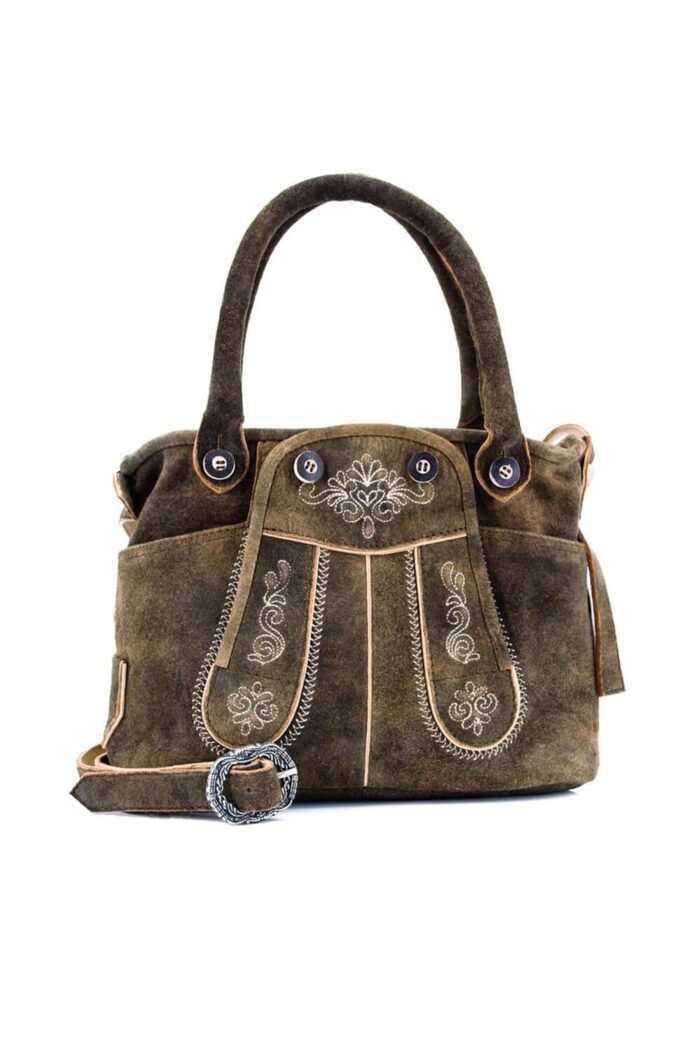
Authentic Brown Suede Bag
$180.00$90.00Authentic Drindle Dress Bavarian Woman Costume
$200.00Authentic Lederhosen Skirt – Lederhosen Women’s Outfit
Price range: $97.75 through $115.00


Frequently Asked Questions
1. What is a dirndl skirt?
A dirndl skirt is the full skirt of a traditional dirndl. It’s gathered at the waist and sits under the apron. It joins the fitted bodice to give the dress its shape.
2. Is a dirndl skirt sold separately from the dress?
Most dirndl dresses are sold as a set with a matching apron. A few sellers list the skirt on its own so you can mix pieces. Check each product page to see exactly what’s included.
3. How long should a dirndl skirt be for Oktoberfest?
Midi length ending around the knee is the classic choice. Mini feels playful and a long skirt feels formal. Pick the length that suits your event and how you like to move.
4. Do dirndl skirts have pockets?
Some skirts hide a pocket at the side under the apron. Not every style has one. Read the product description to see if yours does.
5. Is a dirndl skirt pleated or gathered?
A dirndl skirt is a full skirt that’s gathered at the waist. Some styles use pleats to shape the fullness. Look closely at the product photos since the detail changes from style to style.
6. Do I need a petticoat under a dirndl skirt?
A petticoat isn’t required. It adds volume and that classic swirl under the skirt. Choose one that doesn’t peek out below the hem.
7. Can a beginner sew a dirndl skirt?
Yes. The skirt is the easiest part of a dirndl since it mostly needs straight seams and a hem. The bodice is harder so many beginners start with the skirt alone.
8. What fabric is best for a dirndl skirt?
Cotton and linen breathe well on long festival days. Jacquard gives a richer look. Shiny synthetic cloth tends to feel warm in a busy tent.
9. What is the difference between a dirndl skirt and a lederhosen skirt?
A dirndl skirt is a fabric skirt that belongs to a dress. A lederhosen skirt is a standalone skirt inspired by lederhosen and made from leather or suede. Ours are made from genuine leather and made to order.
10. How do I measure for a dirndl skirt?
Measure your natural waistline above the belly button and decide how long you want the skirt. Match both numbers to the size chart on the product page. Contact us if you fall between sizes.
Wrapping Up the Dirndl Skirt
A dirndl skirt looks simple but the details carry the outfit. Pleats and gathers set the fullness and the pocket adds quiet convenience. Length decides the mood.
You can sew one on a free weekend or order a ready made set and wear it to your next festival. Either way you’re stepping into a long Bavarian and Austrian tradition. And if leather is more your style our lederhosen skirts are made from genuine leather and made to order. Check the product page for the stated leather type and construction details before you choose.