

Introduction
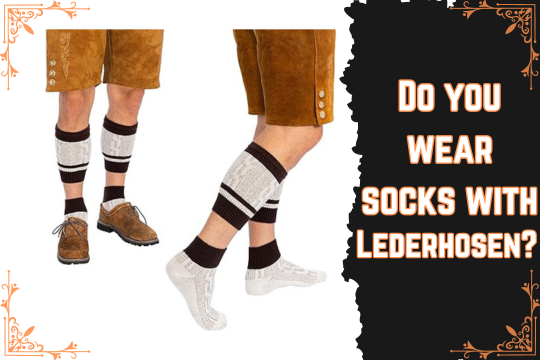
If you’re planning to wear Lederhosen for Oktoberfest or another Bavarian celebration, you may wonder whether socks are actually necessary. The short answer is yes. Traditional socks are an essential part of a complete Men’s Lederhosen outfit, adding authenticity, comfort, and a polished appearance. If you’re putting together a traditional Bavarian look, choosing quality Lederhosen Socks helps complete the ensemble from head to toe.
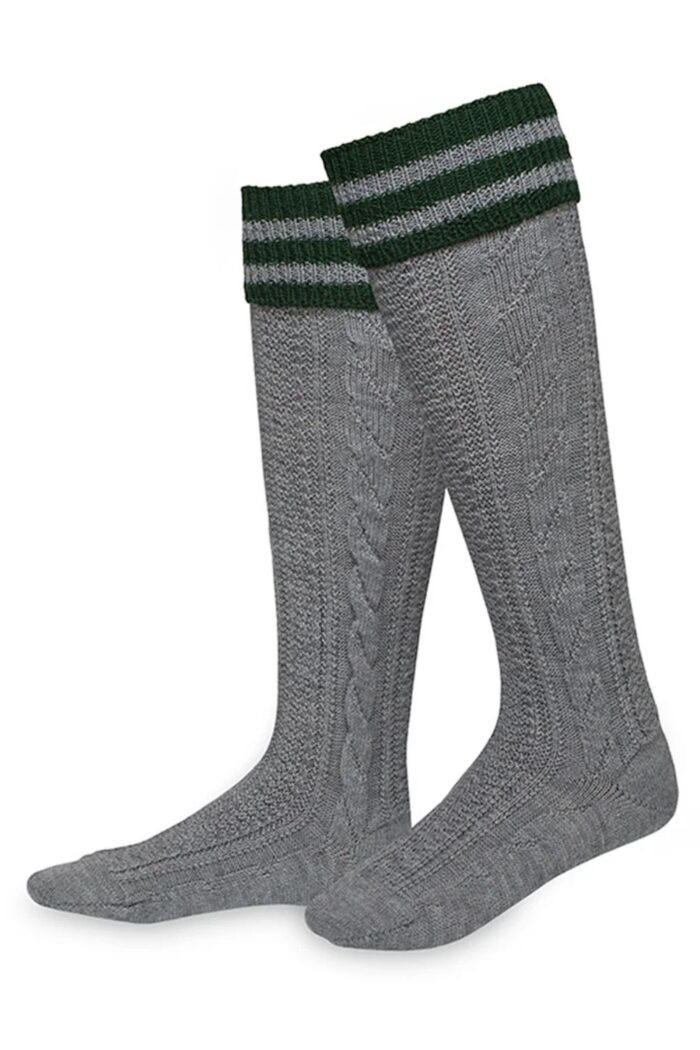
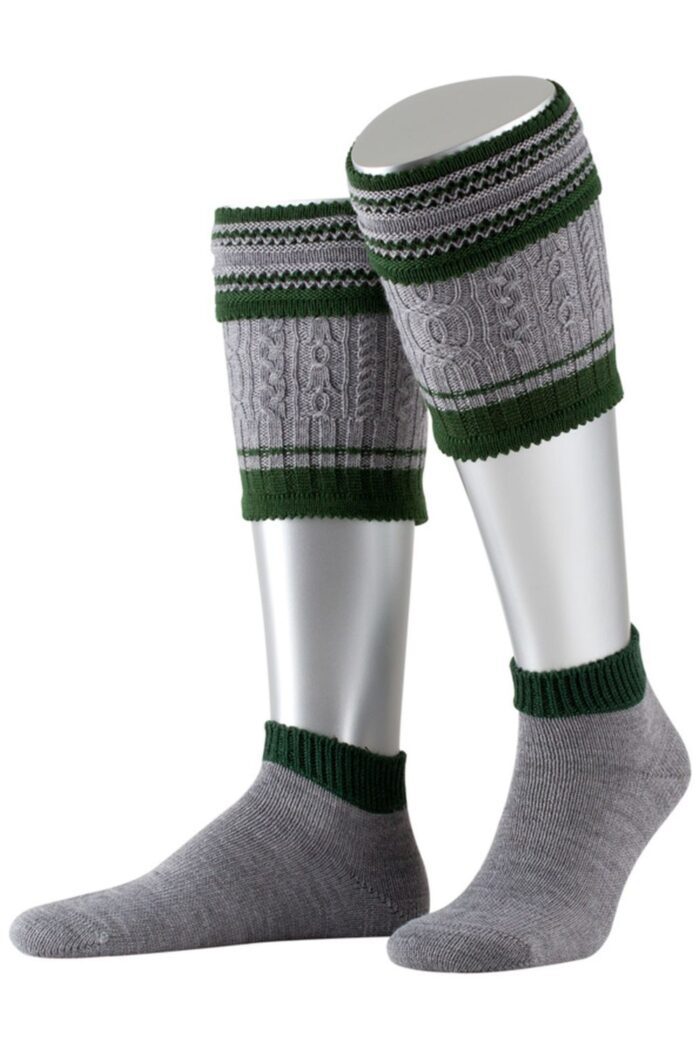
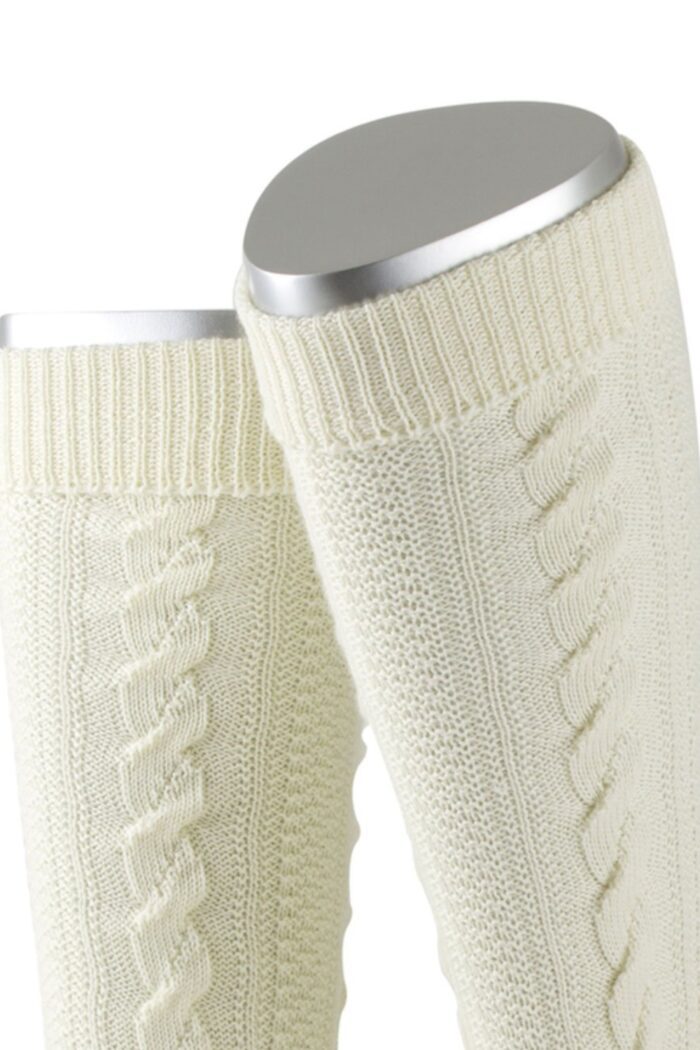
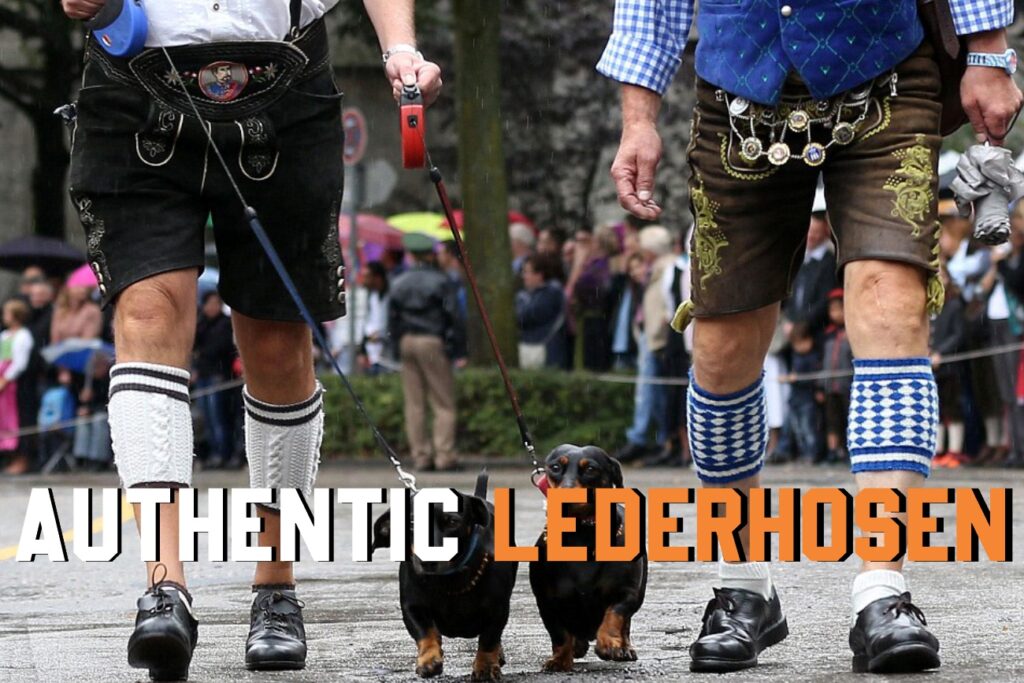
Lederhosen socks are more than just an accessory. They have been worn with traditional Bavarian clothing for generations, helping protect the feet during long days of walking while complementing the distinctive look of Lederhosen and Haferl shoes. Whether you choose classic knee-high Trachten socks or traditional Loferl socks, the right pair helps create the balanced appearance associated with authentic Bavarian attire.
Although modern fashion allows for greater flexibility, wearing appropriate socks remains the preferred choice for Oktoberfest, folk festivals, and other cultural events. Understanding when socks are expected—and when there is room for personal preference—can help you dress confidently while respecting Bavarian traditions.
If you’re looking for advice on selecting the right style, material, or color, our Complete Guide to Choosing the Best Lederhosen Socks for Oktoberfest covers everything you need to know before buying your perfect pair.
Why Are Socks Worn with Lederhosen?
Many people assume Lederhosen socks are purely decorative, but they have served practical and cultural purposes for centuries. From their origins in the Bavarian Alps to today’s Oktoberfest celebrations, socks have remained an important part of traditional German clothing because they combine functionality with heritage.
Tradition and Bavarian Customs
Traditional Bavarian attire is built around carefully coordinated pieces that together create an authentic regional outfit. Just as Lederhosen are paired with checkered or white shirts and traditional Haferl shoes, socks have long been considered a standard part of the ensemble.
For generations, Bavarians have worn distinctive wool socks or Loferl to preserve the traditional appearance of their clothing during festivals, family celebrations, and cultural events. Wearing them today reflects an appreciation for these customs and helps maintain the classic Alpine style that has been passed down through generations.
If you’d like to learn more about their history and cultural importance, explore our guide on The Role of Lederhosen Socks in Traditional German Clothing.
Comfort Throughout the Day
Beyond tradition, Lederhosen socks provide practical comfort. Oktoberfest and similar festivals often involve hours of walking, standing, dancing, and socializing. Quality socks create a comfortable layer between your feet and traditional leather shoes, helping reduce friction and making extended wear more enjoyable.
Many traditional socks are also designed to provide cushioning while maintaining breathability, making them suitable for long festival days in a variety of weather conditions.
Practical Benefits
Historically, Lederhosen were everyday workwear for farmers, hunters, and laborers in the Alpine regions. Thick socks helped keep feet warm during cooler mornings while protecting the lower legs from rubbing against sturdy leather footwear.
Although Lederhosen are now primarily worn for cultural celebrations rather than daily work, these practical advantages remain relevant today. Wearing traditional socks not only completes the outfit but also adds comfort and functionality throughout the day.
Can You Wear Lederhosen Without Socks?
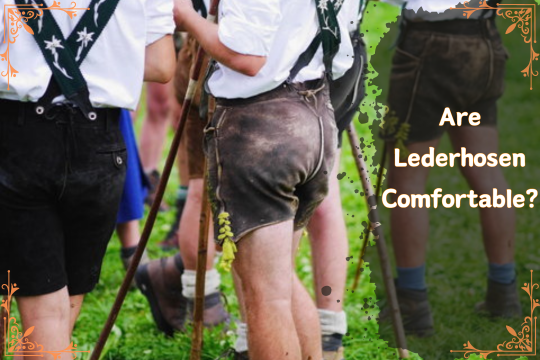
Technically, yes—you can wear Lederhosen without traditional socks. There is no strict rule that prevents it, and some people choose to do so for personal comfort or a more modern interpretation of Bavarian fashion. However, if your goal is to achieve an authentic traditional appearance, the answer is generally no.
The Traditional Answer
Traditional Bavarian dress has always included appropriate traditional socks as part of a complete Lederhosen outfit. Wearing them creates the balanced appearance expected at Oktoberfest, folk festivals, and many cultural celebrations.
Skipping socks can make the outfit appear incomplete and less authentic, particularly when paired with traditional Haferl shoes. If you’re attending an event where traditional Bavarian clothing is encouraged, wearing appropriate socks demonstrates attention to detail and respect for local customs.
Modern Exceptions
Today, Bavarian fashion is more flexible than it once was. At casual gatherings, themed parties, or warm-weather events outside Germany, some people choose shorter traditional socks or less formal styles instead of classic knee-high options. These modern interpretations can still look coordinated when the rest of the outfit maintains a traditional character.
However, completely going without socks is uncommon when wearing a full traditional Lederhosen outfit. It may be acceptable for informal settings or personal preference, but it is rarely seen at authentic Bavarian celebrations where traditional dress is valued.
If authenticity is your priority, wearing traditional Lederhosen socks remains the best choice. They not only complete the overall look but also provide the comfort and practicality that have made them a lasting part of Bavarian attire for generations.

When Is It Acceptable to Wear Different Sock Styles?
Although traditional Bavarian attire has evolved over time, the expectations for wearing socks often depend on the occasion. While authentic Lederhosen socks remain the preferred choice for most events, some settings allow for a more relaxed interpretation without completely abandoning traditional style.
Traditional Festivals
At Oktoberfest, Bavarian weddings, heritage celebrations, and folk festivals, wearing traditional Lederhosen socks is considered part of the authentic outfit. These events celebrate Bavarian culture, and dressing traditionally helps preserve the customs that have been passed down through generations. If you’re aiming for a classic Alpine appearance, wearing appropriate socks is strongly recommended.
Casual Celebrations
For themed parties, local festivals, or informal gatherings, there is generally more flexibility. Many people still wear traditional Bavarian socks, while others choose less formal options that maintain the overall character of the outfit. Although the dress code is usually more relaxed, avoiding modern athletic or business socks helps preserve the traditional look.
Everyday or Tourist Wear
If you’re wearing Lederhosen for sightseeing, cultural tours, family photos, or casual occasions, personal comfort often becomes the priority. While traditional socks are not always expected in these situations, they still enhance the authenticity of the outfit and create a more polished appearance. For visitors who want to experience Bavarian culture respectfully, wearing traditional socks is always a suitable choice.
Common Mistakes When Wearing Socks with Lederhosen
Even though choosing the right socks is relatively simple, a few common mistakes can make an otherwise authentic outfit look out of place.
Wearing No Socks
The most common mistake is skipping socks altogether. While it isn’t prohibited, going without socks removes an important traditional element of the Bavarian outfit and can make your Lederhosen appear incomplete.
Wearing Sports Socks
Modern athletic socks with visible logos, stripes, or performance designs don’t match traditional Bavarian clothing. Their sporty appearance clashes with Lederhosen and distracts from the authentic look of the outfit.
Choosing Bright Colors
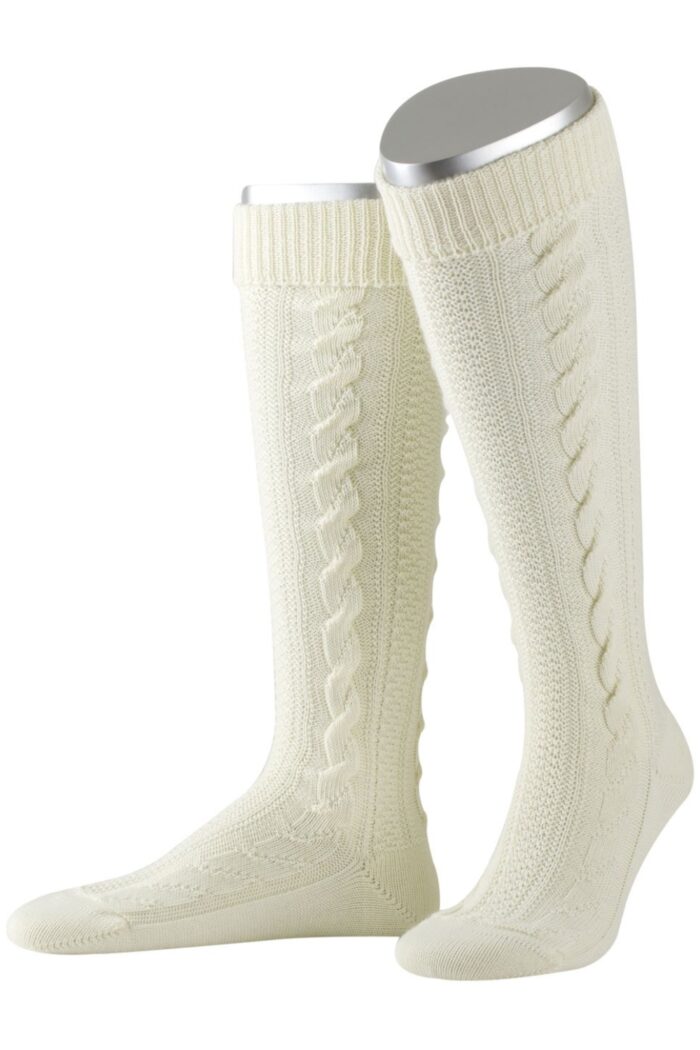
Traditional Lederhosen socks are typically available in neutral shades such as cream, off-white, gray, or natural wool colors. Bright reds, neon shades, or heavily patterned socks tend to stand out for the wrong reasons and reduce the outfit’s traditional appearance.
Wearing Formal Dress Socks
Thin business or formal dress socks are another poor choice. Although they may appear neat, they don’t complement the rugged character of Lederhosen or traditional Bavarian footwear. Classic Trachten socks or Loferl remain the most suitable options for maintaining an authentic look.
Lederhosen Sock Types & Materials
Traditional Lederhosen socks come in a few classic styles, but one material has defined them for centuries: wool. Understanding the materials behind traditional socks helps you choose a pair that looks authentic and stays comfortable from the first toast to the last dance.
Why Wool Has Been the Traditional Choice
For centuries, wool has been one of the most valued materials in traditional Bavarian clothing. Communities throughout the Bavarian Alps relied on natural fibers because they were durable, comfortable, and well suited to everyday life in the mountains. As Lederhosen became an established part of regional dress, wool socks naturally accompanied them, providing both practicality and authenticity. Skilled artisans produced wool socks using traditional knitting techniques that emphasized quality and longevity, and those traditions continue today, making wool Lederhosen socks an enduring symbol of Alpine heritage.
Life in the Bavarian Alps demanded clothing that could adapt to changing weather and demanding daily activities. Wool proved ideal because it provided dependable warmth during cold mornings while remaining comfortable as temperatures changed throughout the day. Its natural resilience also allowed it to withstand repeated wear, making it the practical choice for farmers, craftsmen, and hunters.
Top 5 Benefits of Wool Lederhosen Socks
- Excellent temperature regulation. Wool fibers retain body heat in colder weather yet remain breathable enough to prevent overheating when it gets milder, keeping you comfortable from Oktoberfest in autumn to summer festivals.
- Superior moisture management. Wool absorbs and releases moisture more effectively than many other materials, moving perspiration away from your feet instead of letting it sit against your skin, which is especially valuable during long days of walking, dancing, or standing.
- Natural durability. Wool’s strong natural fibers withstand regular wear over many years. When properly cared for, quality wool socks retain their structure season after season, making them a worthwhile long-term investment.
- Long-lasting comfort. Naturally soft fibers provide gentle cushioning that reduces discomfort during extended walking or standing, while maintaining a consistent, comfortable fit.
- Authentic Bavarian appearance. The classic texture, natural finish, and timeless craftsmanship of wool complement Lederhosen, traditional shoes, and other Bavarian garments in a way that reflects centuries of Alpine heritage.
Wool vs Cotton and Synthetics
Both wool and cotton are natural fibers, but they perform differently with traditional Bavarian clothing. Wool provides better insulation in cooler weather while staying breathable; cotton feels lightweight and soft but absorbs moisture more quickly and can remain damp during extended wear. Quality wool also retains its shape and resilience over time, while cotton socks tend to wear out faster with frequent use.
Synthetic materials are often chosen for affordability and quick-drying properties, but they differ significantly from wool in appearance and performance. Wool naturally balances warmth and breathability, while many synthetics trap heat or feel less comfortable over long hours. Synthetics may imitate the look of traditional styles, but they rarely match the authentic feel and craftsmanship of natural wool.
Wool Is Too Warm
Many people assume wool suits only cold weather. In reality, natural wool fibers regulate temperature, keeping feet warm in cooler conditions while remaining breathable in mild weather, which makes wool comfortable across a wide range of Bavarian events.
Wool Is Scratchy
Not all wool feels rough or uncomfortable. Quality Lederhosen socks use softer wool fibers and careful knitting techniques for a comfortable fit, and modern manufacturing has further improved softness while preserving the traditional appearance.
Wool Is Difficult to Maintain
While wool benefits from gentle handling, caring for quality Lederhosen socks is generally straightforward. Follow the recommended washing and drying instructions, and the socks remain comfortable, durable, and attractive for years without excessive effort.
Matching Lederhosen Socks with Accessories
A truly authentic Bavarian outfit is created through thoughtful coordination rather than individual pieces. Lederhosen socks should never be viewed as an isolated accessory. Instead, they should work naturally with your shoes, suspenders, belts, hats, and other traditional accessories to create a cohesive look. The goal is not to match every item exactly, but to choose complementary colors, materials, and textures that maintain the timeless character of Bavarian clothing.
Matching Socks with Lederhosen Shoes
Think of your socks as the visual bridge between your Lederhosen and your footwear. Brown Lederhosen shoes pair naturally with cream, off-white, and soft gray socks, since these neutral shades complement the warm tones of traditional leather without competing for attention. Earth-tone socks also work exceptionally well with brown footwear, reinforcing the rustic character of classic Bavarian clothing.
If you are wearing black Lederhosen shoes, gray or charcoal socks usually provide the most harmonious appearance, softening the contrast while keeping the outfit refined. Avoid pairing traditional leather shoes with brightly colored or heavily patterned socks, which can distract from the timeless appearance of Bavarian attire.
Coordinating with Suspenders, Belts & Hats
With leather suspenders, focus on harmony rather than exact matching: cream or gray socks pair naturally with brown leather suspenders, while darker leather tones work well with neutral-colored socks that do not overpower the outfit. If your suspenders are embroidered, choose socks with classic knit patterns and understated colors that complement the craftsmanship instead of competing with it.
Rather than matching your socks directly to your belt, coordinate through complementary leather tones and neutral colors, allowing a decorative buckle to stand out without disrupting the overall balance. An Alpine hat with feathers, cord details, or subtle embroidery should complement the rest of your accessories without introducing unnecessary contrast. Neutral-colored socks help the hat’s traditional details stand out naturally.
Balancing Colors and Textures
Traditional Bavarian styling is built on complementary colors rather than perfect matching. Natural leather shades such as brown, chestnut, and dark tan pair beautifully with cream, gray, or natural wool socks, while traditional embroidery and knitted patterns strengthen the connection between accessories. Even metal hardware contributes to the overall appearance: belt buckles, suspender clips, and Charivari chains should share similar finishes so the outfit feels thoughtfully coordinated. Avoid unnecessary complexity. Too many bold colors or decorative accessories distract from the timeless character of traditional clothing.
Coordination Mistakes to Avoid
- Matching everything exactly. Identical colors look less authentic than complementary tones. Slight variations in leather shades and natural fabrics create a more genuine appearance.
- Ignoring leather tones. Mixing very light and very dark leather without visual balance makes the outfit look inconsistent, so coordinate your socks with the overall leather palette.
- Mixing modern and traditional accessories. Modern sports accessories, oversized fashion belts, or casual hats disrupt the classic Alpine character of the outfit.
- Over-accessorizing. Bavarian clothing is known for simplicity and craftsmanship, so choose a few well-coordinated accessories rather than wearing every traditional item at once.
Layering Lederhosen Socks for Cold Weather
Cold weather does not mean sacrificing authenticity. Properly layering Lederhosen socks adds extra insulation without making your shoes feel bulky or changing the classic appearance of your outfit. The additional warmth remains virtually unnoticed while keeping you comfortable during long hours outdoors.
How to Layer Properly
Layering is not about wearing as many pairs as possible. Start with a thin base layer: a lightweight liner sock that fits closely against your foot, providing insulation and a comfortable barrier between your skin and your traditional socks. The liner should fit smoothly without wrinkles or bunching, since a snug fit prevents friction during long periods of walking. Then wear your traditional Lederhosen socks over the liner as you normally would. Because the outer socks remain fully visible, your outfit keeps its classic Bavarian appearance while the hidden liner provides extra insulation.
Comfort should always take priority over extra thickness. After layering, make sure your shoes still fit naturally and allow comfortable movement. Properly fitted Lederhosen shoes provide enough room for light layering without feeling restrictive.
When Layering Is Most Useful
- Winter festivals, which often involve long hours outdoors where low temperatures quickly make feet uncomfortable.
- Outdoor heritage events, such as Alpine gatherings and historical celebrations in open-air settings where wind, damp ground, and shifting weather make a discreet inner layer practical.
- Cold morning celebrations. Many Bavarian events begin early when temperatures are at their lowest, so layering before leaving home keeps you warm during the colder hours while staying comfortable as the day warms up.
Layering Mistakes to Avoid
- Wearing socks that are too thick. Heavy layers make shoes feel tight, reduce flexibility, and create pressure points. A thin base layer plus traditional socks is more comfortable than one bulky pair.
- Layering too many pairs. More layers do not always mean more warmth. Multiple pairs can restrict circulation and make feet feel colder over time.
- Ignoring shoe fit. Tight footwear reduces circulation and makes walking uncomfortable, especially during long festivals or outdoor events.
- Forgetting breathability. Layers that trap excessive heat and moisture cause discomfort during extended wear, so choose breathable layering to keep feet comfortable.
Lederhosen Socks in Traditional German Clothing
Lederhosen socks are much more than a practical accessory. They are an enduring symbol of Bavarian tradition, and understanding their history and cultural significance deepens your appreciation for why they remain part of traditional dress today.
Origins in the Bavarian Alps
The history of Lederhosen socks begins in the Bavarian Alps, where mountain communities developed practical clothing for daily life. The longer length provided additional warmth and protection, and before becoming a cultural symbol, these socks served farmers, craftsmen, hunters, and laborers. As Lederhosen gradually evolved from practical workwear into ceremonial and festive attire, the socks evolved with them, retaining their characteristic appearance while taking on deeper meaning.
Why They Became a Traditional Symbol
Over time, Lederhosen socks became an essential part of the complete Bavarian outfit, one of the defining details of authentic traditional dress. They also represent regional identity and cultural pride: different communities across Bavaria developed their own styles, and the socks continue to symbolize the connection between past and present.
Traditional Design Features
The distinctive appearance of Lederhosen socks reflects generations of Bavarian craftsmanship. Classic textured knit patterns add both character and durability. Cream, gray, and other natural wool shades reflect the traditional colors of the material, and slight regional variations can still be found across different Alpine communities.
Why They Still Matter Today
Lederhosen socks connect modern wearers with Bavarian heritage. Authentic traditional dress is built on attention to detail, and these socks continue to play a vital role in keeping that heritage alive for new generations.
Wearing Lederhosen Socks Year-Round
Many people associate Lederhosen socks exclusively with Oktoberfest, but they are traditionally worn for many occasions throughout the year. Whenever Bavarian clothing is appropriate, traditional socks complete the outfit.
Occasions Beyond Oktoberfest
- Bavarian weddings, where guests and wedding parties often wear Lederhosen or other regional attire.
- Folk festivals throughout Bavaria and the Alpine regions, celebrating local history, music, and crafts.
- Heritage celebrations, historical reenactments, and regional festivals.
- Cultural events and performances, including traditional music, folk dancing, and Alpine gatherings.
Wearing Them in Different Seasons
Spring and summer are popular seasons for Bavarian weddings, folk festivals, and outdoor cultural events, and the breathable knit construction of traditional socks keeps them practical in mild weather without compromising the traditional look. As the weather cools, Lederhosen socks offer additional warmth and protection. For colder outdoor events, many people add discreet layering for extra comfort.
Modern Everyday Wear
Lederhosen socks are no longer reserved for major festivals. Smaller community events, local Bavarian celebrations, and family gatherings often encourage traditional dress, and visitors exploring Bavarian culture frequently wear traditional clothing during heritage tours and regional events. For anyone who attends Bavarian events regularly, these socks become a versatile part of a traditional wardrobe.
Common Misconceptions
- They are only for Oktoberfest. This is the biggest misconception: Lederhosen socks have been part of Bavarian clothing for generations, long before Oktoberfest became world-famous.
- They are too traditional for modern events. Many modern and casual traditional gatherings welcome them.
- They are only worn in Germany. Bavarian culture is celebrated worldwide, and traditional socks are worn wherever Bavarian attire appears.
Choosing the Best Lederhosen Socks
Choosing the right Lederhosen socks involves more than simply picking a traditional-looking pair. The ideal socks should complement your Lederhosen, match your shoes, provide lasting comfort, and suit the occasion you are attending. By considering length, material, and color together, you can build a balanced Bavarian outfit that looks authentic while staying comfortable all day.
Choosing the Correct Length
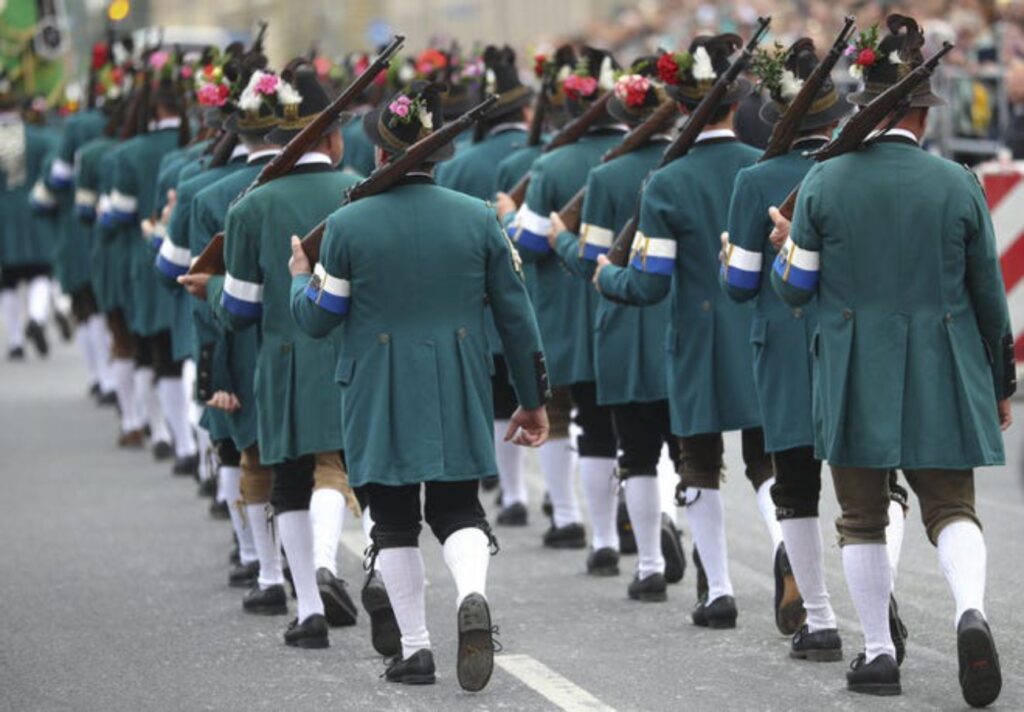
The length of your socks should match both your style of Lederhosen and the formality of the event. Knee-high Trachten socks are the most traditional choice, commonly worn for Oktoberfest, Bavarian weddings, and other formal cultural celebrations where the classic Alpine appearance matters most.
Loferl socks offer a distinctive traditional alternative by combining calf warmers with ankle socks. They are especially popular in warmer weather because they provide a more breathable option while keeping their unmistakable Bavarian character.
Short traditional socks are best suited for casual occasions or for longer Bundhosen, where less of the leg is visible. Although less traditional than knee-high styles, they still complement Bavarian footwear when chosen carefully.
Selecting the Right Material
Wool remains the traditional favorite because it naturally regulates temperature, wicks moisture away from the skin, and provides excellent durability. It performs particularly well at outdoor festivals, where conditions can change throughout the day.
Cotton socks offer a lighter feel and are often preferred in warmer climates or for shorter periods of wear. They provide good comfort but generally absorb more moisture than wool, so they may not perform as well during long festival days.
Choosing the Right Color
Neutral colors remain the most traditional and versatile choices. Cream socks pair beautifully with brown Lederhosen and highlight the rustic character of natural leather footwear, while gray socks offer a slightly more understated appearance that works with both brown and gray Lederhosen.
Black Lederhosen often look best with charcoal or gray socks, creating a refined and coordinated appearance without overpowering the outfit. Small green accents, commonly found in traditional knit patterns, add a subtle Bavarian touch. Rather than choosing bold or highly contrasting colors, aim for shades that harmonize with your Lederhosen and shoes.
Best Socks for Different Occasions
Different Bavarian events call for slightly different sock styles:
- Oktoberfest: Knee-high Trachten socks or traditional Loferl socks remain the most authentic choices. If you will be walking, standing, and dancing all day, wool socks add comfort through better moisture management and temperature regulation.
- Weddings: Traditional Bavarian weddings call for a refined, elegant appearance. Knee-high socks in premium wool or high-quality knits complement formal Lederhosen, with neutral shades such as cream, gray, or soft beige pairing well with most wedding outfits.
- Folk festivals: These offer greater flexibility. Depending on the weather and your personal style, you may choose knee-high Trachten socks, Loferl socks, or short traditional socks — whichever balances authenticity with all-day comfort.
- Winter events: Cold-weather festivals and Alpine celebrations require extra warmth without sacrificing traditional style. Thick wool socks provide excellent insulation, and layering techniques can add even greater comfort while preserving the authentic Bavarian appearance.
Mistakes to Avoid When Choosing Socks
- Wearing athletic socks: Modern athletic socks are designed for sports, not traditional Bavarian clothing. Their bright colors, visible logos, and short length clash with Lederhosen — authentic Trachten socks look far more appropriate.
- Choosing the wrong length: Ankle socks with traditional short Lederhosen disrupt the classic Bavarian silhouette. Knee-high socks generally create the most authentic appearance, so match the length to your Lederhosen and the occasion.
- Ignoring material quality: Low-quality synthetic socks may seem economical, but they offer less comfort and durability than premium wool or quality cotton. Well-made socks improve moisture control, cushioning, and long-term wear.
- Poor color coordination: Socks that clash with your Lederhosen, shoes, or accessories distract from an otherwise well-coordinated outfit. Neutral shades are usually the safest choice.
Styling Lederhosen Socks with Different Outfits
Styling Lederhosen socks correctly goes beyond simply choosing a traditional pair. Different clothing combinations — from short Lederhosen and Bundhosen to embroidered designs and classic Bavarian shirts — influence which sock style creates the most harmonious appearance. Understanding how garments work together lets you preserve tradition while enhancing the overall presentation of your outfit.
Why Outfit Coordination Matters
Traditional Bavarian clothing is designed as a complete outfit rather than a collection of individual garments. Every piece, from the Lederhosen and socks to the shirt and outerwear, contributes to an appearance that reflects Alpine heritage and long-standing regional traditions.
Lederhosen socks play an important role in this coordination because they create a visual connection between the lower and upper parts of the outfit. Their classic colors and traditional knit patterns reinforce the timeless character of Bavarian clothing. Rather than making one garment stand out, traditional styling focuses on creating harmony across the entire outfit.
Styling Socks with Different Lederhosen Styles
Short Lederhosen leave more of the lower leg visible, making your socks a more noticeable part of the outfit. Traditional knee-high socks or Loferl create the classic Bavarian silhouette by filling the space between the shoes and the hem of the Lederhosen. Neutral shades such as cream, gray, or natural wool colors work particularly well because they complement the traditional style without drawing attention away from the rest of the outfit.
Bundhosen extend below the knee, naturally covering a larger portion of the leg. Because less of the sock is visible, shorter traditional socks that sit comfortably beneath the hem often create the most balanced appearance, maintaining a clean transition between the trousers and traditional footwear.
Embroidered Lederhosen feature decorative stitching that becomes the focal point of the outfit. To keep the overall appearance balanced, choose socks with traditional knit patterns and understated colors that complement rather than compete with the embroidery, allowing the craftsmanship of the Lederhosen to remain the highlight.
Styling Socks with Shirts, Jackets & Vests
The clothing you wear above your Lederhosen also shapes how your socks fit into the outfit. Traditional Bavarian shirts remain the foundation of most Oktoberfest outfits, with white and checkered styles being the two most popular choices. Both have been worn with Lederhosen for generations, and neutral-colored Lederhosen socks maintain a balanced appearance with either.
Trachten jackets and traditional vests add refinement and structure, making them popular for cooler weather, evening celebrations, and more formal occasions. Their tailored appearance works best with classic Lederhosen socks in understated colors that support the outfit rather than compete with it.
Styling Socks with Different Shirt Colors
White shirts provide the cleanest and most traditional foundation. Cream, off-white, and gray Lederhosen socks all pair beautifully with white shirts, creating a timeless appearance that highlights the craftsmanship of the Lederhosen.
Checkered shirts in red, blue, and green bring more color and personality while preserving traditional Alpine style. With these patterns, neutral sock colors maintain balance: cream socks pair especially well with red and green checks, while gray socks often complement blue checkered shirts. Let the patterned shirt stand out while the socks quietly support the overall look.
Neutral and earth-tone shirts in beige, olive, brown, and light gray create a rustic Bavarian appearance that pairs naturally with traditional Lederhosen socks. Choosing socks in cream, gray, or other neutral tones reinforces this understated style.
Tips for a Timeless Bavarian Look
- Keep traditional pieces the focus: Lederhosen, traditional shirts, and authentic socks should work together as a cohesive whole. Avoid trendy fashion pieces that distract from the heritage and craftsmanship of traditional attire.
- Maintain visual proportion: The visible height of your Lederhosen socks should suit the outfit. Short Lederhosen naturally reveal more of the socks, while Bundhosen cover more of the leg — keeping these traditional proportions creates a balanced silhouette.
- Choose consistent traditional fabrics: Cotton shirts, leather Lederhosen, wool socks, and traditional wool or felt outerwear complement one another through texture and craftsmanship, preserving the timeless character of the outfit.
Lederhosen Socks Care & Maintenance
Lederhosen socks are an investment in your traditional wardrobe. Like any quality garment made from natural fibers, they benefit from regular care that keeps them looking their best while protecting their traditional character. A few simple habits will preserve their comfort, appearance, and durability for years of celebrations.
Why Proper Care Matters
Quality Lederhosen socks are often made from natural fibers chosen for their comfort, durability, and traditional appearance. Regular maintenance protects these fibers from unnecessary stress, helping the socks retain their softness and the comfort expected from traditional Bavarian clothing.
Care also preserves their classic appearance: traditional knit patterns, natural colors, and careful construction stay attractive when fibers are kept clean and handled gently. Beyond looks, proper care extends the usable life of your socks — dirt, body oils, and repeated wear gradually stress the fibers, so gentle handling after each use helps them remain comfortable and supportive.
Washing Lederhosen Socks
Check the care label first. Before washing, always read the manufacturer’s care instructions — different materials may need slightly different washing methods, temperatures, or detergents. If no care label is available, treating the socks gently is the safest approach.
Hand washing vs. machine washing. Hand washing is the gentlest method: a gentle soak followed by light rubbing removes everyday dirt while protecting the fibers. If machine washing is permitted, use a gentle cycle with cool or lukewarm water, and place the socks in a mesh laundry bag to reduce friction and prevent stretching.
Choose a mild detergent. Gentle cleaning products remove dirt without exposing fibers to harsh chemicals. Avoid strong detergents, bleach, or aggressive cleaning products, which can weaken the fibers and shorten the lifespan of your socks.
Rinse thoroughly. After washing, rinse with clean, cool water until all detergent is removed — leftover soap residue can stiffen the fibers. When removing excess water, gently press the socks instead of twisting or wringing them to maintain their shape.
Drying Lederhosen Socks Correctly
Proper drying is just as important as proper washing. Air drying is the safest method: press out excess water without twisting, then lay the socks flat on a clean towel or drying rack at room temperature. Flat drying is preferable to hanging because it avoids stretching caused by the weight of wet fabric.
Avoid high heat. Tumble dryers, radiators, and other heat sources can damage natural fibers, reduce elasticity, and cause shrinkage — excessive heat may also stiffen the fibers and reduce comfort.
Maintain their shape. Before leaving socks to dry, gently reshape them by hand so they return to their natural form. Avoid pulling or stretching the fabric, which can affect the fit.
Storage & Long-Term Maintenance
Always store your Lederhosen socks only after they are completely clean and dry. Keep them in a cool, dry place, and fold them neatly instead of stretching or tightly rolling them to preserve their natural shape between uses.
If you wear traditional Bavarian clothing regularly, rotate between pairs. Owning more than one pair allows each set to rest between wears, reducing continuous stress on the fibers and helping them maintain elasticity — especially beneficial for quality wool socks.
Even with excellent care, every pair eventually reaches the end of its lifespan. Thinning fabric, reduced elasticity, persistent stretching, or worn heels and toes indicate it is time for a replacement, which keeps both comfort and authentic appearance intact.
Common Sock Care Mistakes to Avoid
- Using hot water: Hot water stresses the fibers and increases the risk of shrinkage. Cool or lukewarm water cleans effectively while maintaining shape and softness.
- Using harsh detergents: Strong detergents and bleach weaken natural fibers over time. A mild detergent keeps socks clean and comfortable after every wash.
- Drying with high heat: Tumble dryers and direct heat sources reduce elasticity and affect fit. Natural air drying is much gentler.
- Storing damp socks: Putting socks away before they are completely dry can cause unpleasant odors, moisture buildup, and fiber damage. Always let them dry thoroughly first.
Women & Lederhosen Socks
Traditionally seen as men’s attire in Bavarian and Alpine culture, lederhosen have become a stylish and empowering choice for women — a bold alternative to the classic dirndl at Oktoberfest, weddings, and themed events. Pairing lederhosen with socks nods to tradition while adding charm, comfort, and a touch of individuality to the look.
Why Women Are Embracing Lederhosen
Women’s lederhosen have surged in popularity, offering a unique alternative to dirndls. While dirndls exude feminine elegance, lederhosen provide a rugged yet chic aesthetic that resonates with those looking for something bold and unconventional. Their versatility lets women blend tradition with modern fashion: intricate embroidery and high-quality leather embody both cultural heritage and contemporary style, making them an empowering option for Oktoberfest, themed weddings, and casual celebrations alike.
Types of Socks for Women’s Lederhosen
- Loferl socks: The most traditional option. These calf-length socks, often made of wool in earthy tones or intricate patterns, create an authentic Bavarian vibe.
- Knee-high socks: A great choice for a more formal or elegant look. They provide extra warmth and work perfectly for weddings or evening events.
- Decorative socks: A modern trend — playful patterns or embroidery let women add a personalized touch to their outfits.
Matching Socks with Women’s Lederhosen
- Classic match: Neutral tones like cream or beige pair seamlessly with dark brown or black lederhosen, creating an understated yet polished look.
- Festive flair: Brightly colored or patterned socks add a playful touch, perfect for festivals like Oktoberfest.
- Formal elegance: Lace-detailed or monochromatic socks elevate the ensemble for formal events like weddings.
Styling Tips for Special Occasions
For weddings or parties, accessorize your lederhosen with a delicate dirndl blouse underneath or a shawl. Knee-high socks with decorative accents can add a feminine touch, ensuring a cohesive and sophisticated outfit.
Why Women Love the Combination
- Rooted in tradition: Wearing socks with lederhosen harks back to Alpine heritage, where socks meant warmth and protection. Pairing them honors these traditions while adding timeless style.
- A fashion statement: Rugged leather paired with soft, detailed socks creates a bold, balanced contrast — a showstopper at any event.
- Comfort and practicality: Socks add warmth during chilly outdoor festivities and late-night celebrations, plus support for long days of walking, dancing, and mingling.
Conclusion
So, do you wear socks with Lederhosen? Yes—if you want to achieve a traditional Bavarian look, socks are considered an essential part of the outfit. They contribute to the authenticity of Lederhosen while also providing additional comfort during long days of walking, standing, and celebrating.
Although modern fashion allows for some flexibility, traditional sock styles such as knee-high Trachten socks and Loferl remain the preferred choices for Oktoberfest and other Bavarian events. Wearing appropriate socks shows attention to detail and helps complete the classic Alpine appearance that has been part of Bavarian culture for generations.
Whether you’re attending Oktoberfest for the first time or adding to your traditional wardrobe, choosing to wear the right socks is one of the simplest ways to create a polished and authentic Lederhosen outfit.
Frequently Asked Questions
1. Do you have to wear socks with Lederhosen?
Traditionally, yes. Socks are an important part of authentic Bavarian attire and complete the classic Lederhosen outfit. While not mandatory, they are strongly recommended for Oktoberfest and traditional events.
2. Can you go without socks when wearing Lederhosen?
Technically, yes. However, going without socks is not considered traditional and may make the outfit look incomplete, especially when paired with Haferl shoes.
3. Are Loferl socks traditional?
Yes. Loferl socks are an authentic Bavarian style that originated in the Alpine regions. They remain a popular choice for Oktoberfest and other traditional celebrations.
4. Can you wear ankle socks with Lederhosen?
You can wear ankle socks if they’re part of a traditional Loferl set. Ordinary ankle or athletic socks are generally not recommended for an authentic Bavarian appearance.
5. What color socks should you wear with Lederhosen?
Traditional colors such as cream, off-white, gray, and natural wool shades are the most appropriate. These colors complement Lederhosen and traditional Bavarian shoes while maintaining an authentic look.
Ready to complete your Oktoberfest look? Shop our handmade, made-to-order Bavarian collection — free shipping on orders over $249. Browse the Collection →

One thought on “Do You Wear Socks with Lederhosen”